
Last updated November 25, 2026
 Sweep & inspection
 Caps & crowns
 Flue relining
 Masonry repair
 Gas fireplace service
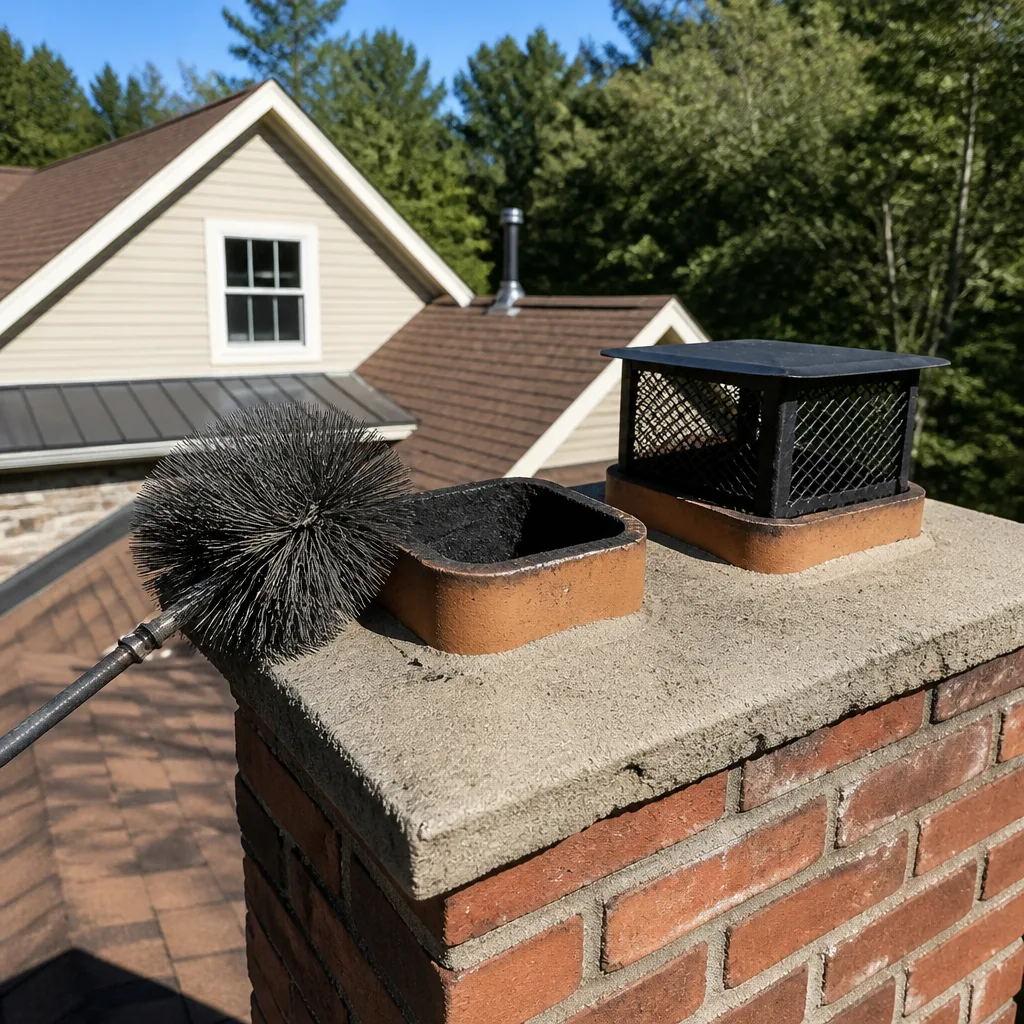
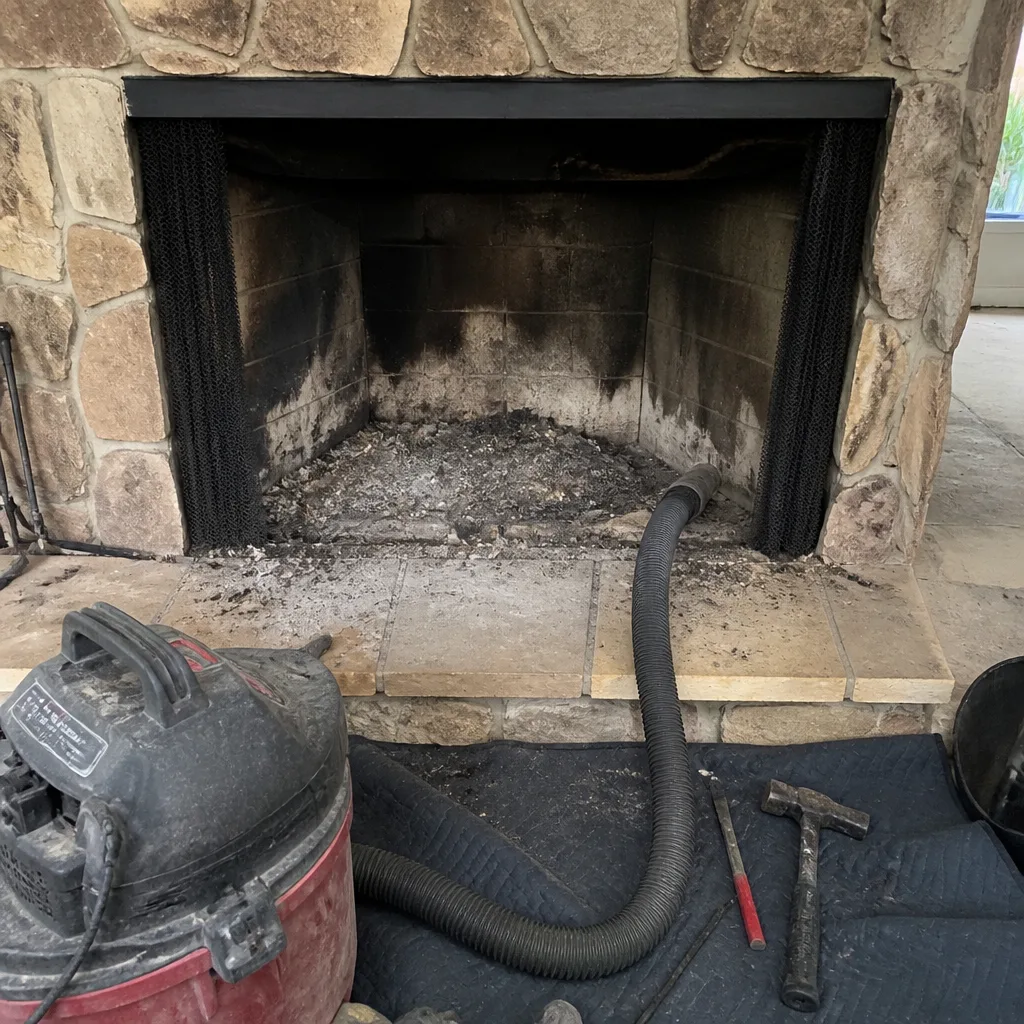
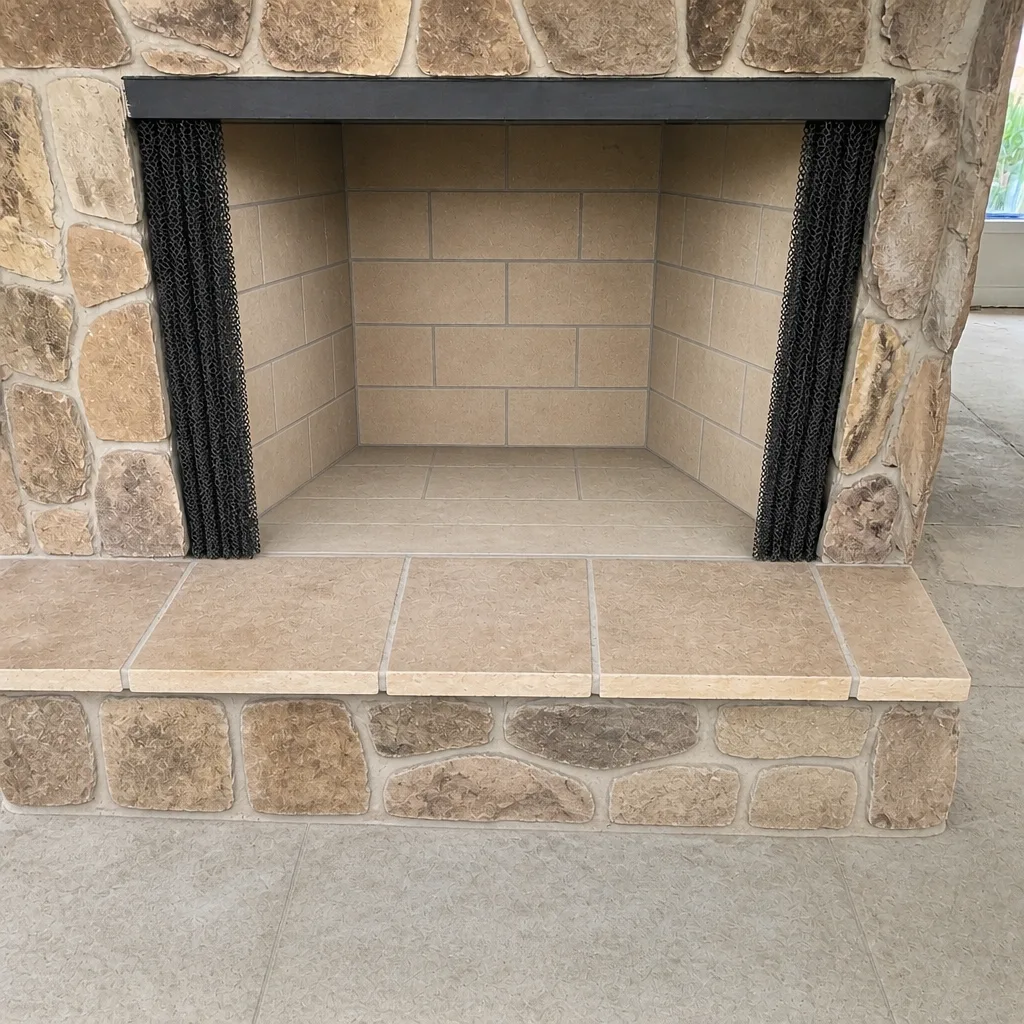
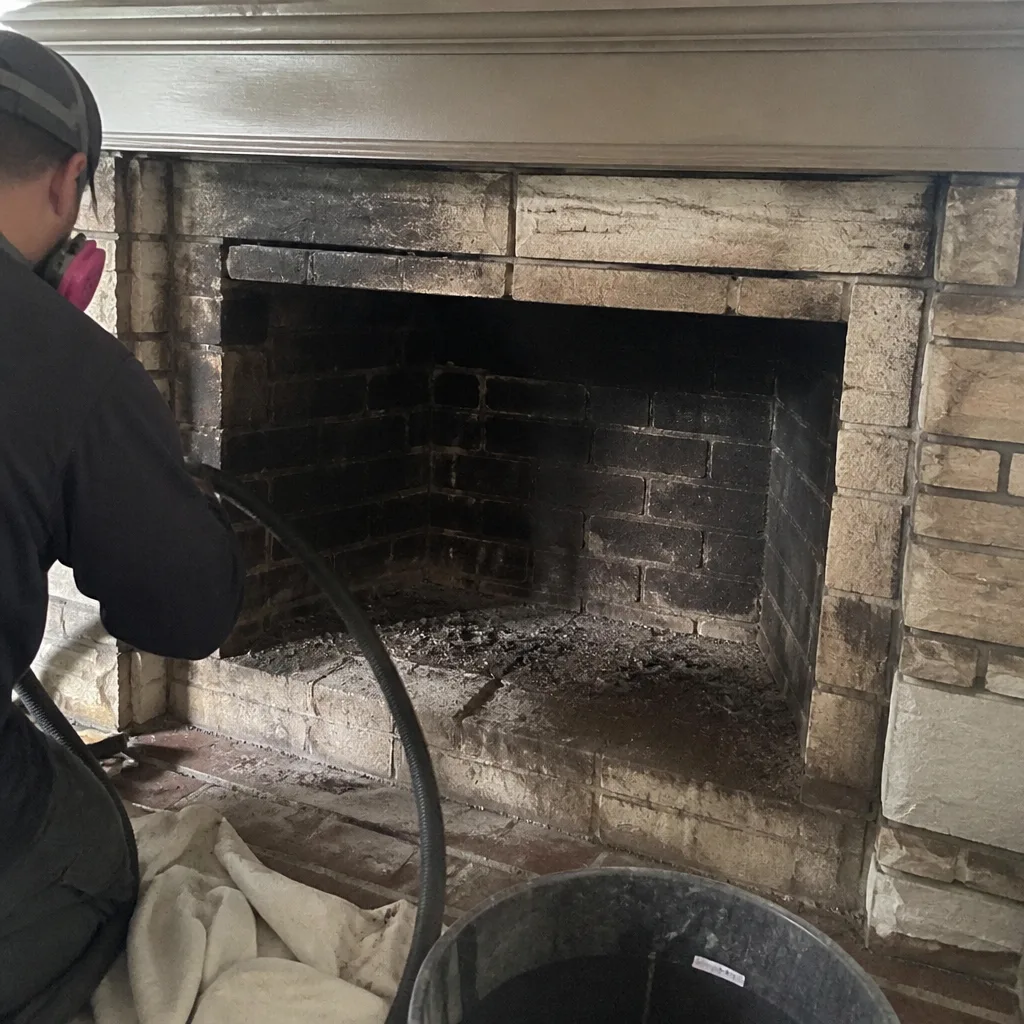
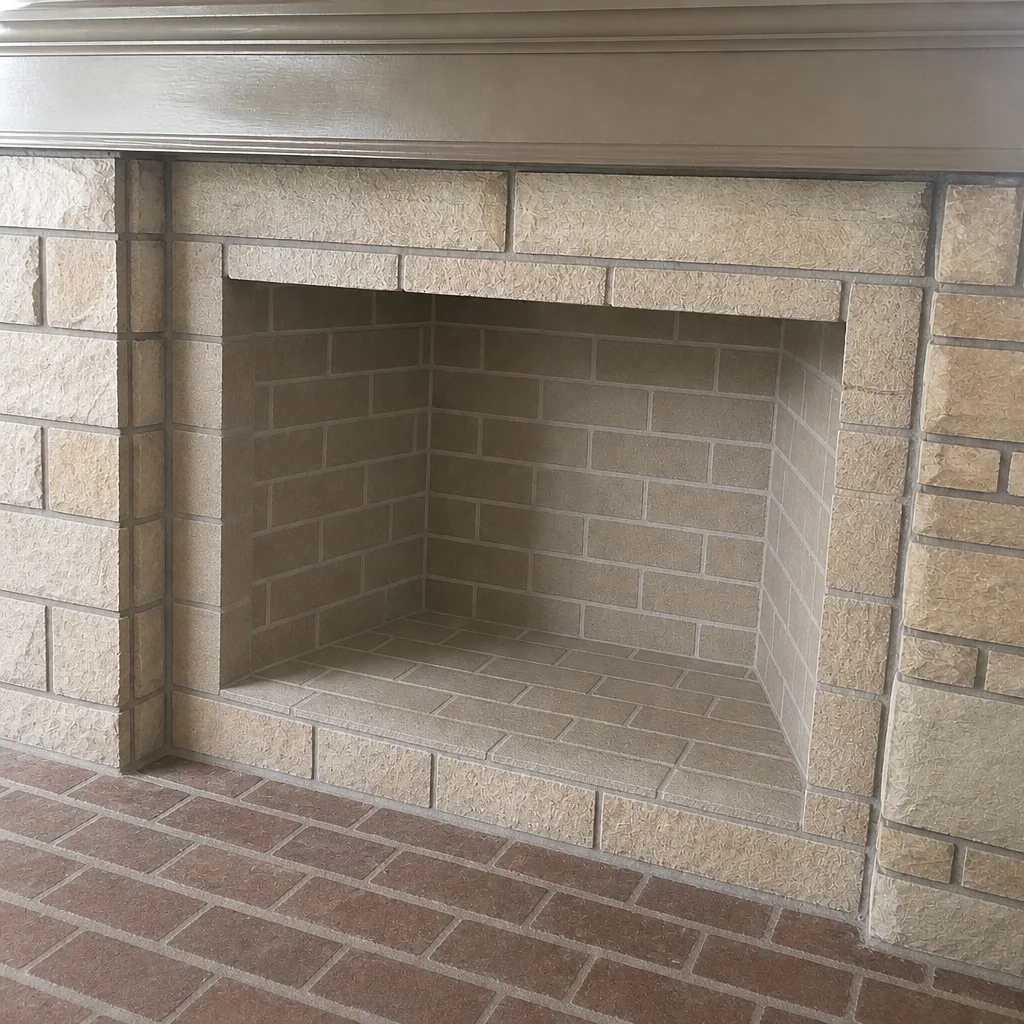
Level 1 sweep and inspection to the NFPA 211 annual standard - flue, crown, cap, and flashing checked and photographed
Chimney sweep logs do not sweep chimneys. They loosen some creosote - which then falls where a brush and vacuum still have to collect it.
Chimney Sweep Maintenance Checklist for Cypress Homeowners
Most chimney maintenance advice you’ll find online was written for a house that burns wood from October to April. That’s not a Cypress home. Here, a fireplace gets used hard for maybe six weeks when the nights finally drop, and then it sits for months while the sun works on the outside of the chimney. A checklist built for Vermont winters misses most of what actually goes wrong here: stucco crowns that crack in the dry heat, terracotta caps that degrade under UV, and flues that collect Santa Ana wind debris through the summer. This guide gives you a component-by-component checklist calibrated to how Cypress homes actually live, with separate tracks for wood-burning, gas, and dual-fuel systems.
Quick Answer
A Cypress homeowner should run a visual checklist twice a year (before the first fire and again in late spring), book a professional sweep and inspection once a year if you burn wood regularly, and check the exterior crown, cap, and flashing every fall before the Santa Ana winds pick up. Gas and dual-fuel systems follow a different track and need their own annual inspection even though they produce less creosote.
Styles & brands we work with
- Sweep & inspection
- Caps & crowns
- Flue relining
- Masonry repair
- Gas fireplace service
Table of Contents
- The Wood-Burning Track: What to Check and When
- The Gas and Dual-Fuel Track
- Exterior Checklist for Cypress Chimneys
- Damper Check Sequence Before Your First Fire
- Smoke Chamber and Smoke Shelf: What You Can Verify Yourself
- Insert Maintenance Intervals by Brand
- Building Your Annual Calendar
- Common Mistakes to Avoid
The Wood-Burning Track: What to Check and When
If you burn real wood in your Cypress home, this is the checklist that matters most. Wood smoke leaves creosote, and creosote is what feeds chimney fires. The good news is that a Southern California burn season is short, which means you have more control over buildup than a homeowner in a colder climate. The bad news is that short, hot, intermittent fires actually produce more creosote than a steady burn, because the flue stays cooler and smoke condenses on the walls. That’s the counterintuitive part most checklists skip.
Run through the wood-burning track in this order:
- Before the season (September or October): Look up the flue from the firebox with a flashlight. You’re checking for visible soot glaze, flaky creosote, or a heavy black coating. If you can see more than roughly a thin dusting on the walls, it’s time for a chimney sweep.
- Before the season: Open and close the damper fully. It should move with some resistance but not grind, stick, or fall open on its own.
- Before the season: Check the firebox for cracked brick, crumbling mortar joints, or a warped grate.
- Before the season: Confirm the chimney cap is intact and the screen isn’t torn.
- Weekly during burn season: Empty ash when it reaches the bottom of the grate. A thick ash bed smothers the fire and increases smoke.
- After the season (March or April): Do a full visual check again, especially the exterior, and book your annual inspection.
- After the season: Check the roof and the cap for wind-blown debris that collected through the spring.
One Cypress-specific note: because our burn season is short, homeowners often skip the annual sweep on the theory that “we only burned a little.” But creosote buildup is not linear. A few hot fires on a cold flue can deposit more than a whole winter of steady burning. The only way to know for sure is to have someone look, either with your own flashlight or with a professional camera.
The Gas and Dual-Fuel Track
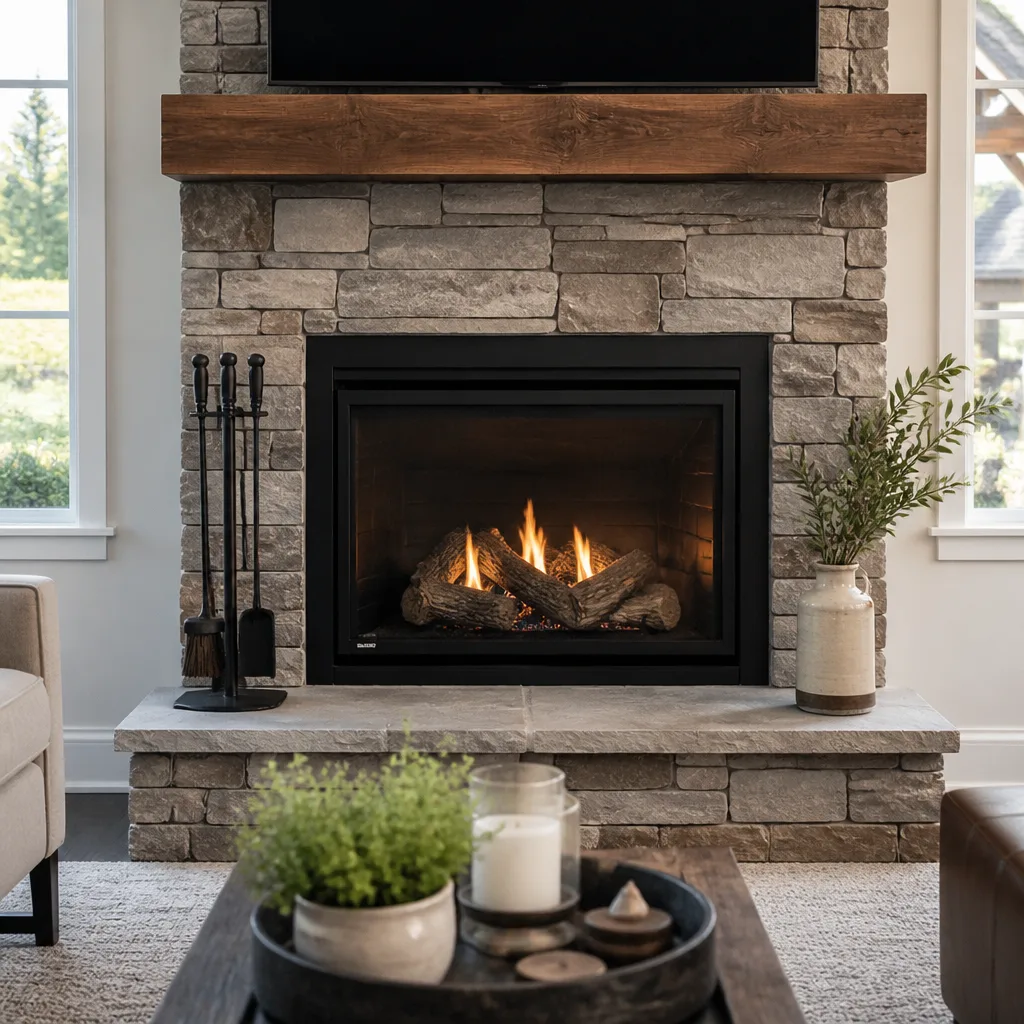
Gas fireplaces in Cypress homes don’t produce creosote the way wood does, but they aren’t maintenance-free. They produce moisture, they produce small amounts of corrosive byproducts, and their venting, burners, and logs still need attention. If your system is dual-fuel (wood-burning firebox with a gas log set installed), you need to run both tracks, and this is where most homeowners miss items, because mixing protocols creates confusion.
Gas-only fireplace checklist
- Annually: Have the burner, pilot assembly, and venting inspected by a specialist. Gas lines and combustion are not a DIY item.
- Annually: Confirm venting is unobstructed and the termination cap is clear of bird nests and debris.
- Monthly during use: Look at the flame. A healthy gas flame is mostly blue with some yellow at the tips. A flame that is mostly yellow, or that lifts and flickers heavily, needs a technician.
- Monthly during use: Check the glass or screen for soot streaks. Heavy soot on a gas fireplace means incomplete combustion or a venting issue.
- Annually: Wipe down the glass and interior per the manufacturer’s instructions.
Dual-fuel checklist
A dual-fuel setup is a wood firebox with a gas log set, and it carries the risks of both systems. The gas log set must be inspected for correct placement (logs in the wrong position change the flame pattern and can produce soot), and the flue still needs to be checked for the wood creosote that came before the gas set was installed. If your home had a wood fire for years and was later converted to gas logs, that old creosote is still on the walls and still flammable. This is one of the most overlooked conditions we find in Cypress homes.
Exterior Checklist for Cypress Chimneys
The exterior of a Cypress chimney takes more punishment than the interior. Between the dry summer heat, the intense UV exposure, and the seasonal Santa Ana winds, exterior components degrade faster than they would in a wetter climate. Here’s what to inspect every fall, ideally in September or October before the winds pick up.
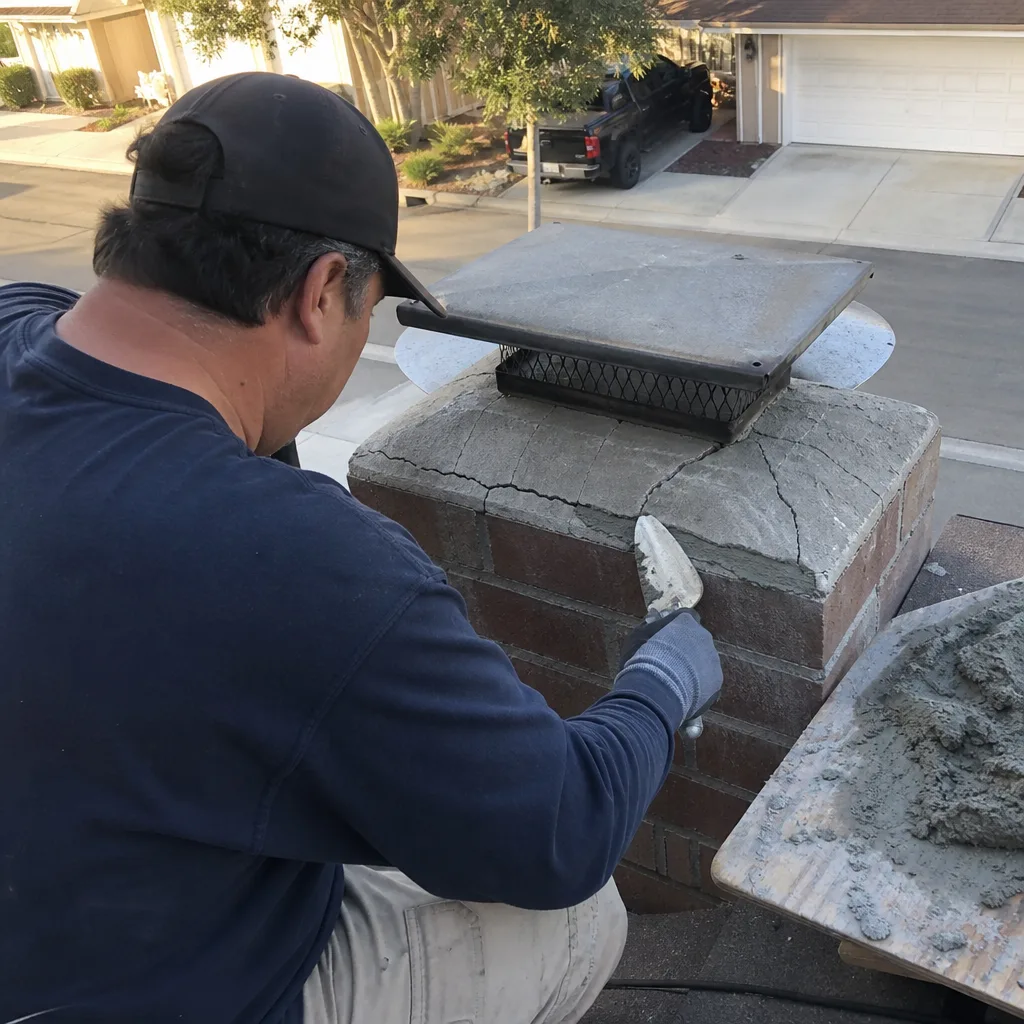
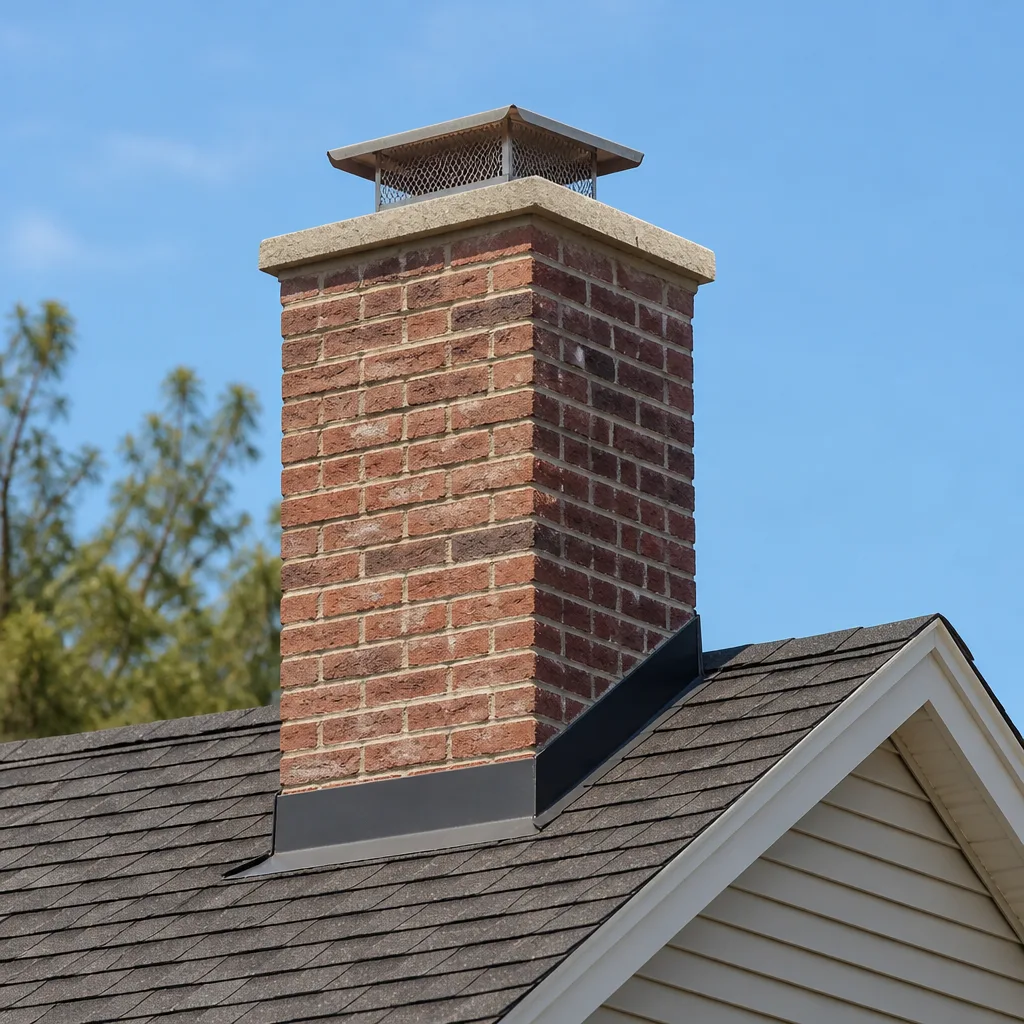
- The crown. Many Cypress chimneys have a stucco crown over the masonry. Stucco is not waterproof by itself, and hairline cracks open up over time. Look for cracks, and check whether water can pool on the crown surface. A crown that doesn’t shed water is a crown that will fail.
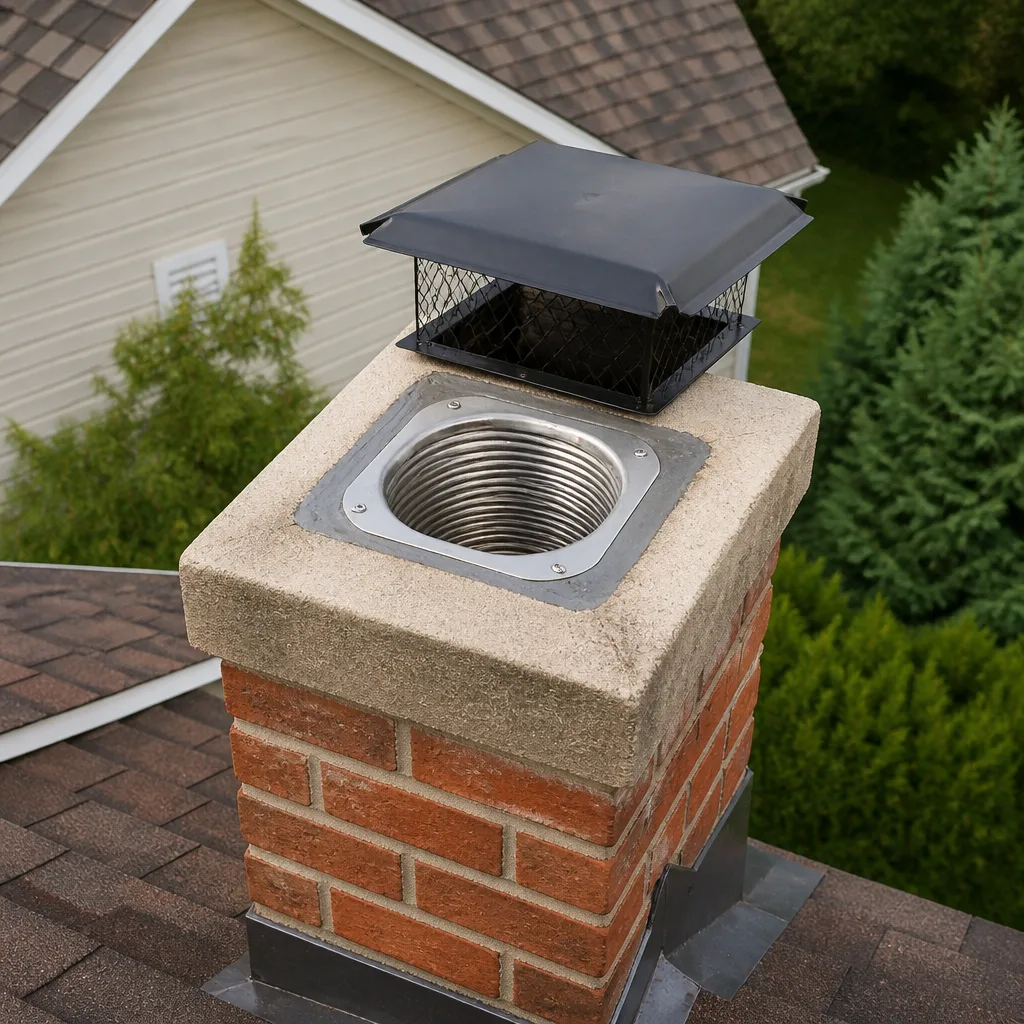
- The cap. Terracotta chimney caps (the flue tiles extending above the crown) degrade under UV exposure and thermal cycling. Look for spalling, chipped edges, or a cap that has shifted. A damaged cap lets water straight into the flue.
- The spark arrestor and mesh screen. Santa Ana winds push debris into screens. A clogged screen stops the chimney from drafting correctly and is a fire risk. Clear it before fall.
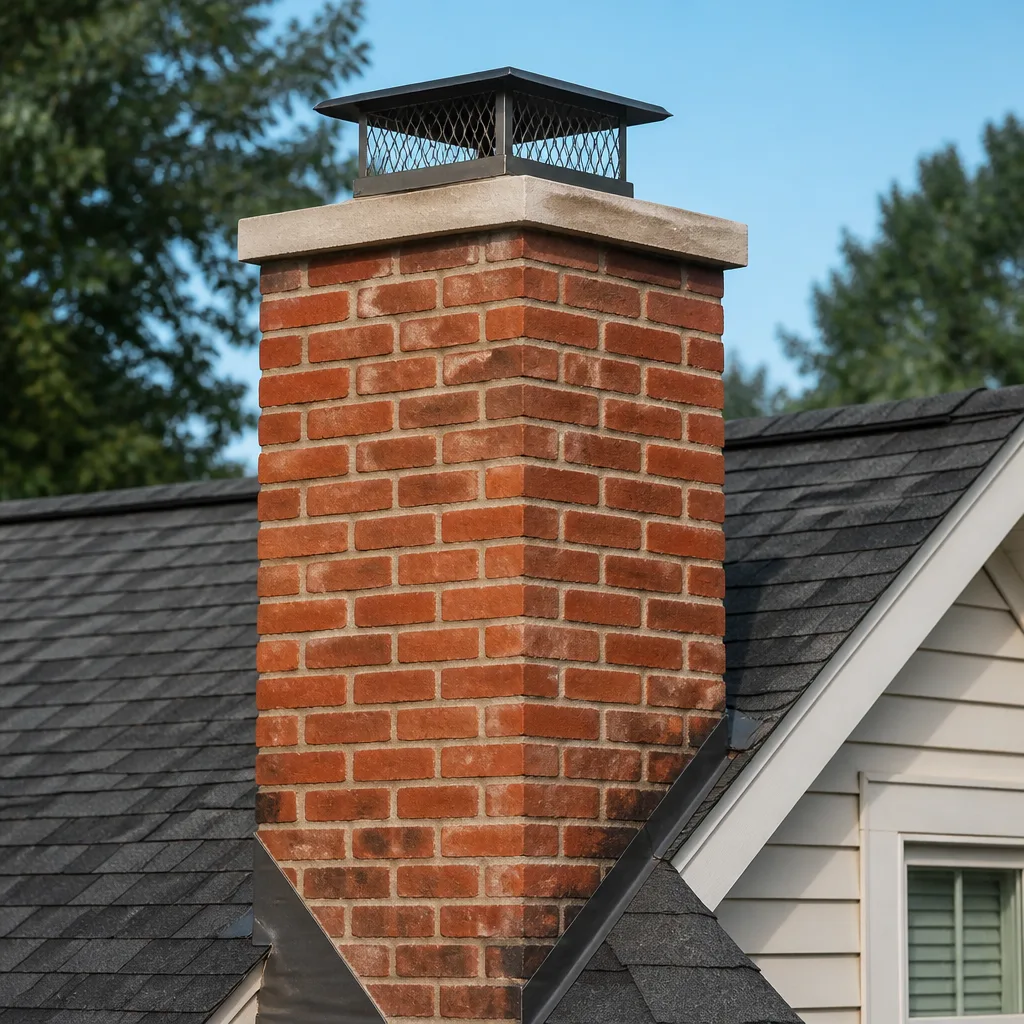
- Flashing. The metal where the chimney meets the roof is where most leaks start. Look for lifted edges, rust, or gaps in the sealant.
- Masonry and mortar joints. Look for crumbling mortar, loose bricks, or white chalky staining (efflorescence), which suggests moisture is moving through the masonry.
- Debris on the roof around the chimney. Pine needles, leaves, and wind-blown material collect on the roof side of the chimney and hold moisture against the flashing.
- The firebox-to-chimney seal from the outside. Check the exterior where the chimney meets the house for gaps or cracks.
For crown and cap hardware, we work with purpose-built chimney components from Famco and Copperfield, because the quality of the parts determines the quality of the result. A generic building-supply cap will protect your chimney for a while; a cap designed for chimney service will protect it for much longer.
Damper Check Sequence Before Your First Fire
The damper is the single most common mechanical failure in a fireplace, and there are two ways it typically fails: it sticks shut, or it fails to stay open. Both are caught by a simple sequence you can run yourself before your first fire of the season. Doing this once in the fall catches almost every damper problem before it becomes a smoky room or a safety issue.
- Reach up into the firebox and locate the damper handle. Most Cypress fireplaces use a simple pull or lever.
- Open the damper fully. Feel for smooth travel. Any grinding, scraping, or hard sticking means the damper needs service.
- Release the handle. The damper should stay open on its own. If it falls closed under its own weight, the pivot or spring is worn and needs repair.
- Close the damper fully. It should seat evenly, without a gap on one side. A gap means the damper isn’t sealing and you’re losing heat up the flue when the fireplace is off.
- Reopen it and confirm the handle will hold it open. This is the position the damper must be in during any fire.
- Look up past the open damper. You should see daylight (or the cap) above, not a solid obstruction. If you can’t see up, something is blocking the flue.
If your damper fails any step, don’t light a fire until it’s addressed. A stuck-closed damper fills the room with smoke. A damper that won’t stay open is a carbon monoxide risk. If you’re not comfortable reaching into the firebox, that’s a fair call, and our technicians will check it for you as part of a fireplace repair visit.
Smoke Chamber and Smoke Shelf: What You Can Verify Yourself
The smoke chamber is the tapered area above the damper that funnels smoke from the firebox into the flue. The smoke shelf is the flat ledge just behind the damper. Together they are the most overlooked part of the system, and they’re also two components a homeowner can check visually before calling a pro.
Here’s what to look for:
- Rough or corrugated walls in the smoke chamber. Smooth walls guide smoke up; rough walls create turbulence and cause smoke to roll into the room. If you can see jagged mortar or a corrugated surface, that’s a candidate for resurfacing.
- Cracks or gaps in the smoke chamber walls. These are a fire path and need professional evaluation.
- Creosote buildup on the smoke shelf. The shelf collects debris. A heavy accumulation there means the flue is dirty too.
- Debris sitting on the smoke shelf. Leaves, soot falls, and even bird nest material end up here over time.
- Water staining or efflorescence in the smoke chamber. This points to a chimney leak higher up, likely at the crown or cap.
- Visible daylight through cracks in the smoke chamber. That’s a serious finding and should be inspected professionally before any fire.
Smoothing a rough smoke chamber is specialized work. We use HeatShield for flue and smoke chamber resurfacing, which is a repair most sweep-only companies simply can’t perform. If your inspection turns up a rough or cracked smoke chamber, we can resurface it rather than referring you out.
Insert Maintenance Intervals by Brand
Many Cypress homes with a fireplace insert are running a Heat & Glo, Heatilator, or Napoleon unit. These are common installations in this area, and each has its own recommended maintenance intervals that a generic checklist won’t tell you. Follow the manual that came with your unit first; below is the general pattern those manuals share.
Heat & Glo inserts
- Annually: Professional inspection of the firebox, baffle, and venting.
- Annually: Check the door gasket seal and glass for cracks.
- As needed: Clean the glass with a fireplace-specific cleaner.
- Annually: Check the blower (if equipped) for dust buildup.
Heatilator inserts
- Annually: Inspect the refractory brick and baffle for cracks.
- Annually: Check the flue collar and venting for obstructions.
- Annually: Verify the door latch and gasket.
- As needed: Inspect the firebox for soot buildup.
Napoleon inserts
- Annually: Professional sweep and inspection of the flue and firebox.
- Annually: Check the door glass, gasket, and latch.
- Annually: Verify the blower and any electronic controls function correctly.
- As needed: Clean the glass and check the secondary air tubes.
Inserts change the maintenance picture because the flue cross-section is smaller and the draft is different. A wood-burning insert in a Cypress home may need sweeping more often than a standard open fireplace, not less, because the same volume of smoke passes through a tighter space. If you’re not sure whether your liner is sized correctly for the insert, that’s a professional question, and it’s one we answer as part of a chimney repair inspection.
Building Your Annual Calendar
A checklist is only as good as the calendar behind it. Here’s how we’d build a maintenance schedule for a Cypress home, using the local climate and burn season as the anchors.
- Early September: Full visual interior and exterior check. Test the damper. Book your professional sweep and inspection before the November rush.
- October: Clear the spark arrestor screen and remove roof debris after any early Santa Ana winds. Confirm the cap is intact.
- First cold week of the season: Before your first fire, run the damper sequence again and confirm the flue is clear.
- Monthly during burn season: Check the firebox and glass. Empty ash regularly.
- Weekly during burn season: Glance at the chimney exterior if you can see it, and check for smoke rolling back into the room during fires.
- March: After the last fire of the season, do the interior check again and look for any new stains or cracks.
- May: Inspect the exterior after the spring wind season. This is the best time to schedule crown or cap work, before summer heat.
- Annually: Book the professional sweep and inspection, regardless of how much you burned.
The key local insight is that your two high-check seasons are fall (before burning) and late spring (after the winds and before the summer heat). Most of what goes wrong with a Cypress chimney happens between those two points, and catching it on that rhythm is what keeps a small crack from becoming a repair project.
Common Mistakes to Avoid
- Using a cold-climate checklist that cues you to sweep every fall regardless of use. In Cypress, your burn season is short and your real risks are different: exterior stucco cracking, cap UV degradation, and wind debris. Match the checklist to your actual seasonal pattern.
- Skipping the annual inspection because “we only burned a few fires.” Creosote buildup isn’t proportional to hours burned. A handful of hot fires on a cold flue can leave meaningful glaze, and only an inspection confirms whether you’re clear.
- Clearing the spark arrestor screen with a stick from the ground. You can’t see what you’re loosening, and pushing debris down into the flue creates a worse problem. Clear the screen at the roof, or have it cleared professionally.
- Treating a stucco crown as maintenance-free. Stucco cracks are the leading source of chimney leaks in this area. Check for cracks every fall and have them sealed before the rainy season.
- Running a dual-fuel setup without checking the original wood flue. If your firebox was converted to gas logs, the creosote from years of wood fires is still on the flue walls. It’s flammable and needs to be removed, not just inspected.
- Replacing a worn terracotta cap with an off-the-shelf screen only. A proper cap protects the flue from water and animals, not just birds. Purpose-built chimney caps do far more than a hardware-store screen.
- Ignoring a minor damper problem until the first cold night. A damper that sticks in October is a damper that fails in November when you need it. Test it in September, not the night you want a fire.
See the difference
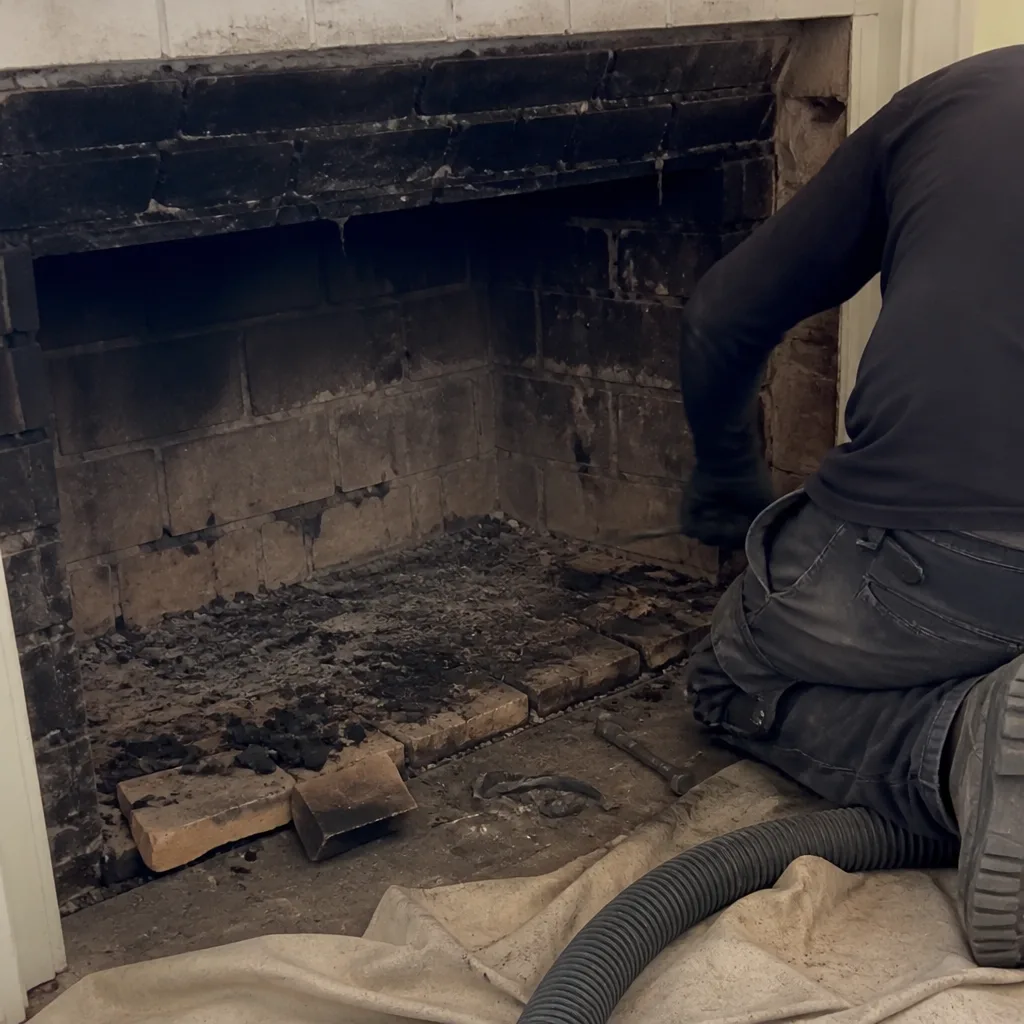 Before
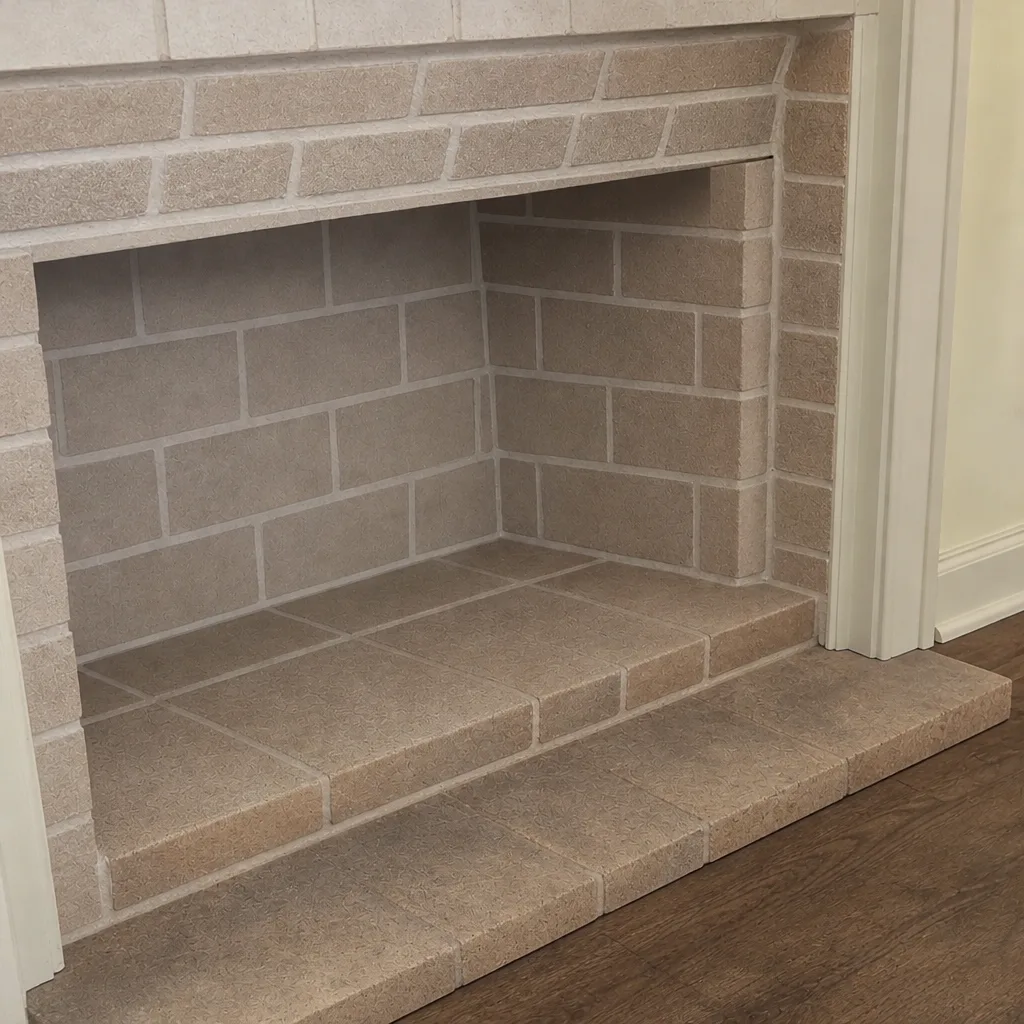 After
 Before
 After
 Before
 After
When to Call a Professional
Most of the checklist above is safe for a homeowner to run. The moment a check turns up a crack in the smoke chamber, visible daylight through the firebox, a damaged liner, or anything involving a gas connection, stop and call a specialist. Gas lines and combustion are not a homeowner item, and neither is anything that requires opening the masonry or the flue. The same goes for a crown repair, cap replacement, or liner resurfacing; those are structural chimney jobs.
At Cypress Chimney Sweep Pros we handle the entire chimney system, from the firebox to the cap, so the team that inspects your chimney is the same team qualified to repair it. We work with professional-grade brands including DuraFlex, HeatShield, and Copperfield, because the quality of the parts determines the quality of the result. Our technicians have up to 10 years of experience. If you’d rather have one specialist look at the whole system than piece together the checklist across multiple contractors, we’re set up for that. Free estimates are available in Cypress. Call (877) 492-3411. We answer 24/7. Fast dispatch from 7am to 7pm, Sunday through Friday.
Frequently Asked Questions
Once a year is the standard if you burn wood regularly, and that’s the right rhythm for most Cypress homes even with a short burn season. If you burn every week in season, or you notice creosote glaze on the flue walls during your own visual check, book more often. Call (877) 492-3411 for an exact quote; estimates are free.
Yes. An annual inspection is not just about creosote; it catches crown cracks, cap damage, smoke chamber issues, and venting problems that a few fires can introduce or reveal. A short burn season doesn’t lower your risk from exterior damage. Call (877) 492-3411 to book an inspection; estimates are free.
A sweep removes creosote and debris from the flue and firebox. An inspection evaluates the condition of the whole system: firebox, damper, smoke chamber, flue, crown, and cap. Most annual maintenance visits combine both, so you’re clean and evaluated in one visit.
Yes, for the visual items. You can look up the flue with a flashlight, check the damper through its full range, look at the smoke chamber walls and smoke shelf, and inspect the exterior crown, cap, and flashing from the ground or roof safely. Anything that turns up a crack, a gas smell, or visible daylight needs a professional.
The original wood flue still carries the creosote from those years of wood fires, and that creosote needs to be swept out, not just inspected. A dual-fuel setup requires both the wood track and the gas track on your checklist. Call (877) 492-3411 to book a sweep and inspection; estimates are free.
If the walls look rough, corrugated, or cracked rather than smooth and sound, that’s the sign resurfacing may be needed. You can see this from the firebox with a flashlight. Smooth chambers draft better and reduce smoke rollback. We can resurface a rough smoke chamber using HeatShield rather than referring it out.
Skipping the annual check means small cracks and early cap damage go unaddressed, which can lead to a larger repair project down the road and, in the case of creosote buildup, a genuine chimney fire risk. It’s not a scare tactic; it’s the reality of how chimneys wear. Call (877) 492-3411 to schedule your check; estimates are free.
Yes. We inspect and service wood-burning fireplaces, gas systems, and dual-fuel setups, including inserts from Heat & Glo, Heatilator, and Napoleon. Whether you have one or all three, we look at the whole system from Cypress Chimney Sweep Pros and cover the interior and exterior components together.
The Bottom Line
A good chimney maintenance checklist is calibrated to your system, your climate, and your burn pattern, not a generic yearly reminder. For a Cypress home, that means two visual checks a year (fall and late spring), a separate track for wood-burning, gas, and dual-fuel systems, extra attention on the stucco crown, terracotta cap, and wind debris, and a professional sweep and inspection every year. The whole point is catching small cracks and early wear before they become repair projects, and knowing exactly what you’re looking at rather than guessing.
If you’d like the checklist run for you by a specialist who can also fix anything found in the same visit, that’s what we do. Free estimates in Cypress. Call (877) 492-3411.
Written by the team at Cypress Chimney Sweep Pros.