
Last updated November 25, 2026
 Sweep & inspection
 Caps & crowns
 Flue relining
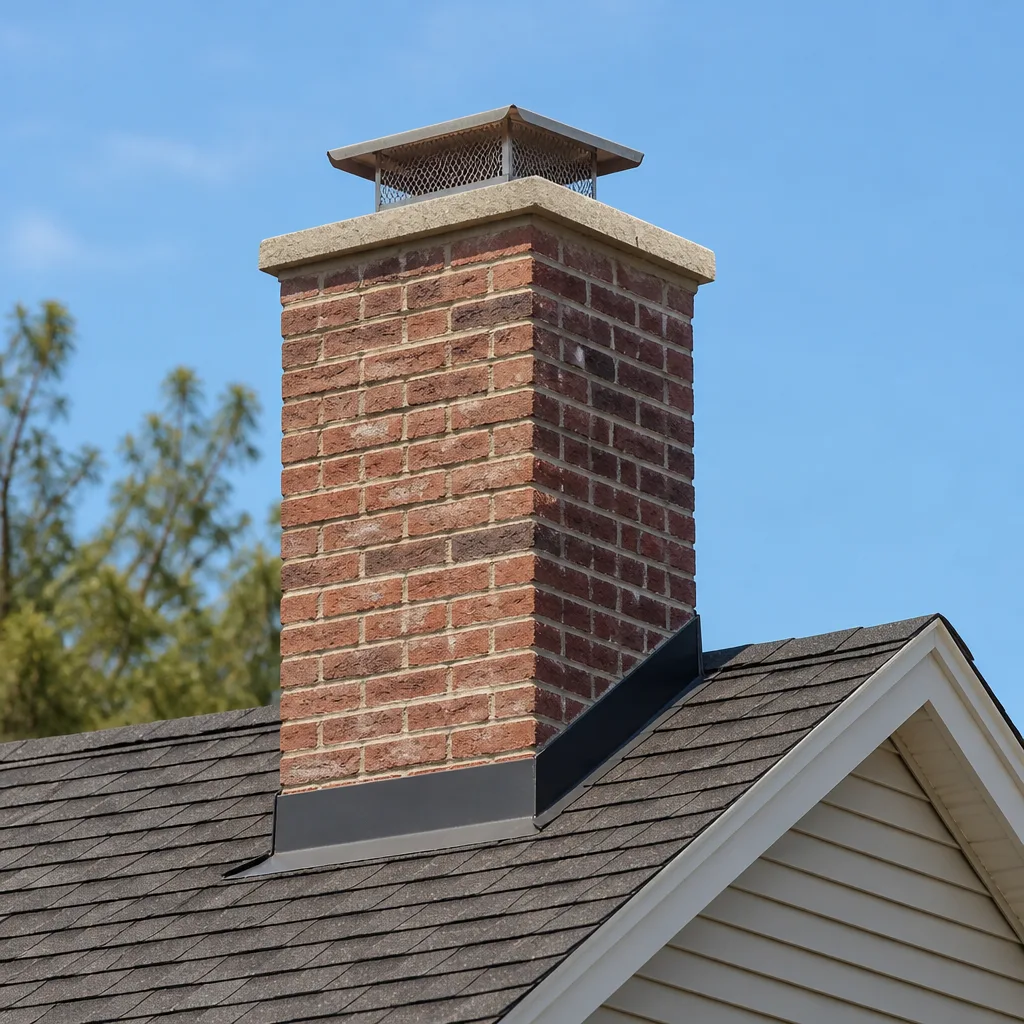 Masonry repair
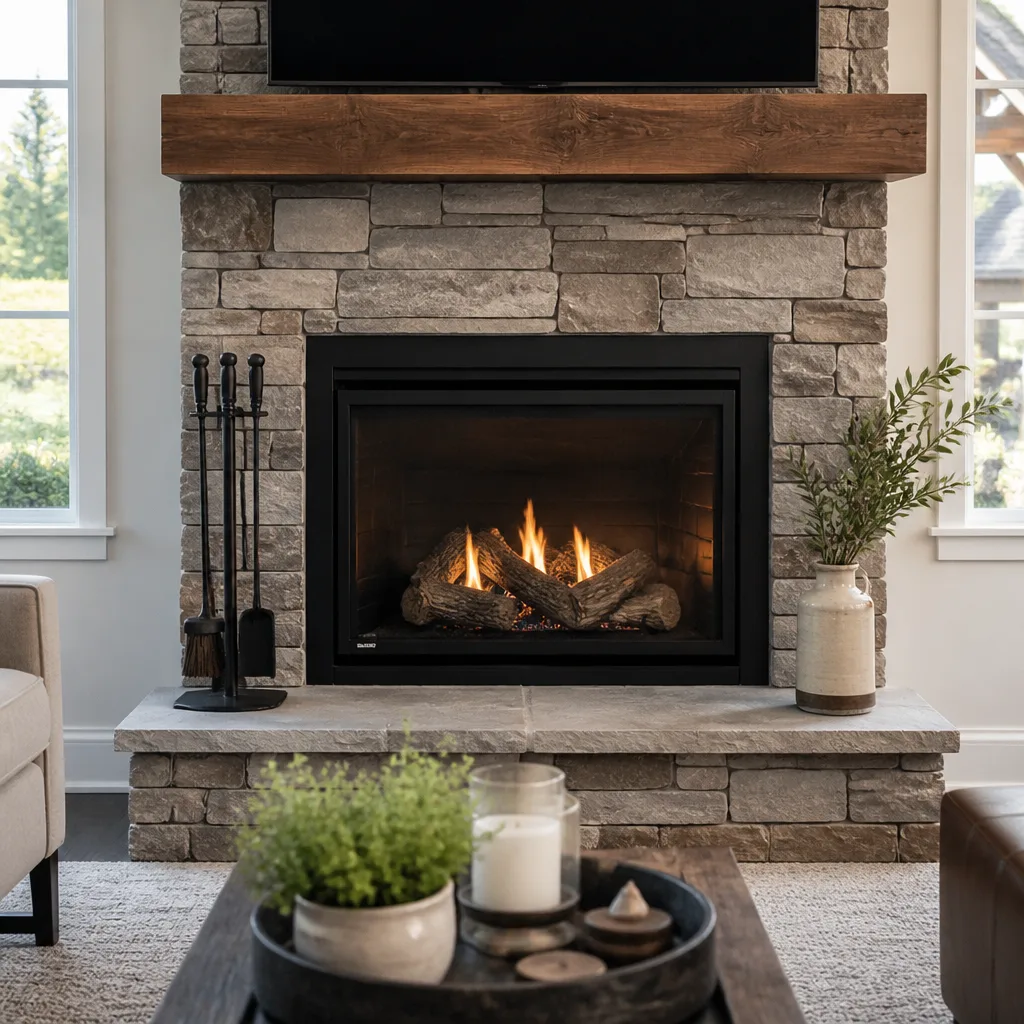 Gas fireplace service
Level 1 sweep and inspection to the NFPA 211 annual standard - flue, crown, cap, and flashing checked and photographed
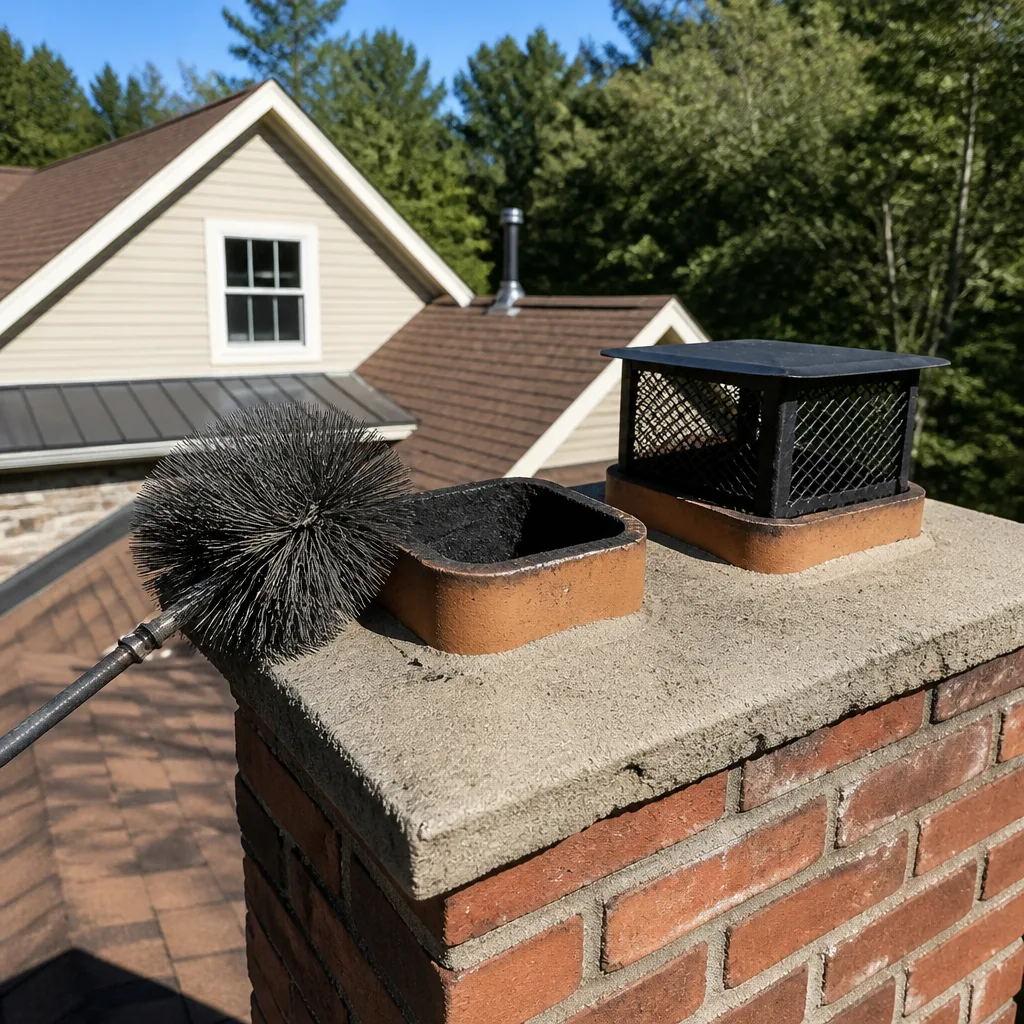
Chimney sweep logs do not sweep chimneys. They loosen some creosote - which then falls where a brush and vacuum still have to collect it.
Chimney Cleaning Emergency Preparedness Guide for Cypress Homes
Most chimney fires start on a quiet evening in the first cold week of the season, not in the middle of a storm. The flue has sat unused for months, a glaze of creosote has hardened on its walls, and the first hot fire of the year sends burning flakes up into a channel nobody has looked at since spring. That gap between disuse and first flame is where the real risk lives, and it’s the one most homeowners never plan for. This guide is your written response protocol. It covers how to recognize an active chimney fire, the correct move in the first 90 seconds, how Santa Ana wind conditions change the picture, what to do after an incident, and the emergency checklist every Cypress household should assemble before the season starts.
Quick Answer
A chimney fire emergency in Cypress calls for three moves, in order: get everyone out and call 911, close the firebox doors and shut the damper only if you can do it safely, then stay out of the house until the fire department clears it. After any suspected chimney fire, the entire system must be professionally inspected before you light another fire. Preparation beats reaction here – the sweep, the inspection, and the documentation should all happen before your first fire of the season, not after it goes wrong.
Styles & brands we work with
- Sweep & inspection
- Caps & crowns
- Flue relining
- Masonry repair
- Gas fireplace service
Table of Contents
- How to Recognize an Active Chimney Fire From Inside Your Home
- The First 90 Seconds: What to Do Step by Step
- Why Santa Ana Winds Raise Chimney Fire Spread Risk
- Pre-Season Preparation That Actually Addresses the Risk
- Post-Fire Protocol: Inspection Before Any Reuse
- The Emergency Documentation Checklist for Cypress Homes
- Creosote: The Fuel Load You Can’t See
- When Not to Light the Fireplace at All
How to Recognize an Active Chimney Fire From Inside Your Home
A chimney fire isn’t always the roaring, fire-truck-visible event people picture. Many burn hot and short, and a homeowner inside the room may hear and smell something wrong before they ever see flame. The signals that matter fall into three categories: sound, smell, and sight. Learning to separate normal combustion noise from the abnormal signs is the first piece of preparedness, because a chimney fire caught in the first minute is a very different situation than one that’s had ten.
Sounds that signal trouble
- A low, roaring rumble like a freight train or a distant jet – this is one of the most reliable warning signs and often the loudest thing you’ll hear.
- Rapid popping, crackling, or ticking that doesn’t match the fire you built, especially clicking that continues after the flames should have settled.
- A rushing or whooshing sound coming from the chimney itself, not the firebox.
Smells that signal trouble
- A sharp, hot, almost metallic burning smell distinct from normal wood smoke.
- Smoke backing into the room when the damper is open and the flue should be drawing.
- The acrid smell of burning creosote, which many homeowners describe as closer to hot tar than to a campfire.
Sights that signal trouble
- Flames or sparks visible at the top of the chimney, or dense smoke pushing out of the cap.
- Discoloration or heat haze on the chimney pipe, or a glow at the roofline.
- Pieces of creosote or black flakes falling into the firebox or landing on the roof.
The challenge is that normal combustion produces some crackle and some smoke, and in a Cypress home the fireplace may sit against shared framing that carries sound in confusing ways. The key distinction is intensity and change: a chimney fire escalates, while a normal fire settles into a rhythm. If the sound or smell keeps building after you’ve stopped adding wood, treat it as a real event. When in doubt, call 911 – a false alarm costs nothing compared to a delayed response. Our technicians have up to 10 years of experience and have seen how quickly these situations develop, which is why we push pre-season inspection so hard.
The First 90 Seconds: What to Do Step by Step
The first minute and a half after you suspect a chimney fire is where outcomes are decided. The sequence below is the protocol we want every Cypress homeowner to have memorized before the season starts. Read it twice. Practice the mental walk-through with your household. The goal isn’t heroics – it’s getting people out and giving the fire department the information they need.
- Alert and evacuate. Shout “fire,” get everyone out of the house through the nearest exit, and call 911 from outside. Do not stop to gather belongings. Do not go back in for pets if the fire is active.
- Close the firebox doors, if you can do it safely. Shutting glass doors on a fireplace starves the fire of oxygen and limits how far it can reach. If the doors are hot or the room is smoky, skip this step and keep moving.
- Close the damper only when it’s safe. A closed damper can reduce draft and cut the fire’s oxygen supply, but it also traps heat and smoke inside the flue. Many chimney professionals advise closing it if you can reach it without entering a smoke-filled room. If you can’t, leave it – the fire department will handle venting.
- Get a garden hose ready outside, not inside. If you have a hose that reaches the chimney top, you can wet the roof and surroundings to protect against sparks. Do not climb a ladder or get on the roof – this is exactly how homeowners get seriously hurt.
- Stay out. Wait for the fire department to arrive and clear the structure. Do not re-enter until they give the word.
What not to do, and when not to use an extinguisher:
- Don’t spray a fire extinguisher into the firebox. A dry-chemical extinguisher aimed at a chimney fire can send a chemical cloud back into the room, and it does nothing to a fire burning up in the flue where the actual heat is.
- Don’t pour water down the chimney from the inside. The thermal shock to a hot flue can crack tiles and create a new problem.
- Don’t open the firebox doors wide to “see what’s happening.” That feeds oxygen to the fire.
An extinguisher is for a fire that’s escaped the firebox onto the hearth or nearby materials, not for the chimney itself. Knowing the difference is one of the most useful pieces of knowledge a fireplace household can carry. When the fire is out and the smoke has cleared, your next call should be to a specialist who can assess the whole system – not just the flue.
Why Santa Ana Winds Raise Chimney Fire Spread Risk
Santa Ana winds are the single most important local weather factor for Cypress chimney fire risk, and they don’t get nearly enough attention in a homeowner’s planning. These are strong, dry, hot, offshore winds that push out of the interior and across the region, lowering humidity and drying out vegetation and building materials. When a chimney fire sends sparks or burning creosote fragments out the top of a flue during a Santa Ana event, the surrounding roof, attic vents, and dry landscaping are far more vulnerable than on an ordinary evening. The very conditions that make a fireplace feel comforting are the conditions that make a chimney fire more dangerous.
There’s a second layer to this that matters for Cypress households. Santa Ana winds increase draft in some chimney configurations and can make a flue that normally draws well behave unpredictably – back-puffing smoke into the room, sending hot embers into unexpected places, or causing the fire to burn hotter and faster than you intended. A system that’s already compromised by creosote buildup, a cracked flue tile, or a damaged crown has very little margin on a windy, dry night.
What pre-season preparation addresses this exposure:
- Removing creosote. The fuel that feeds a chimney fire is the glaze on the flue walls. A professional sweep clears it before the winds arrive, which is the single highest-impact step you can take.
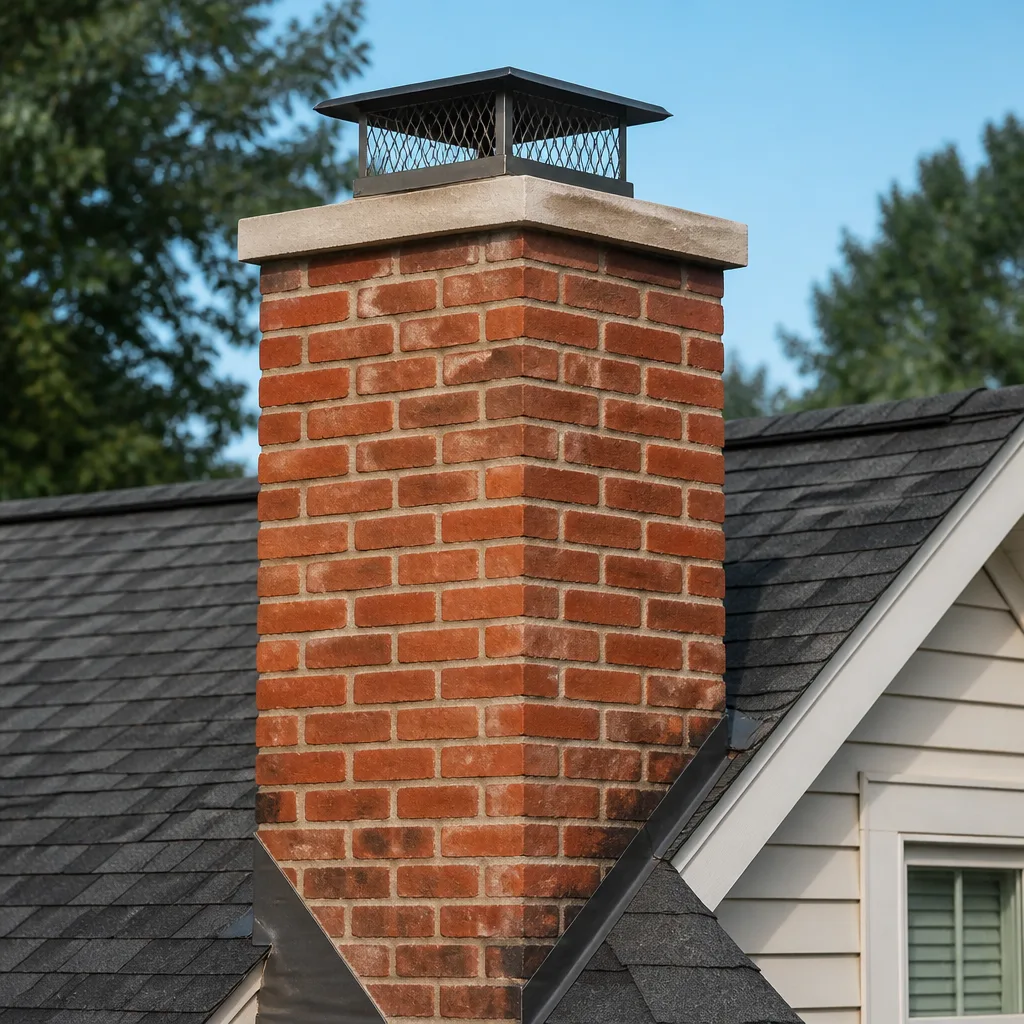
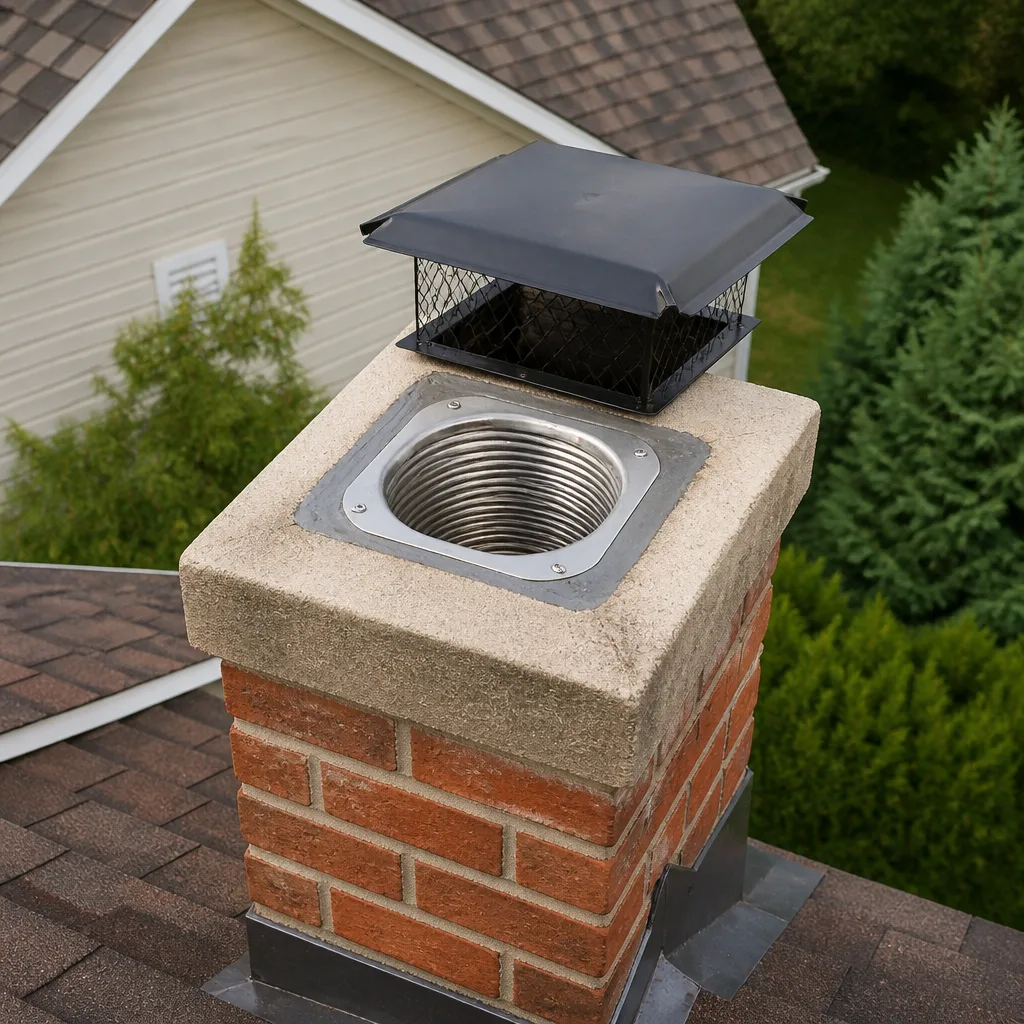
- Confirming the cap and crown are intact. A missing or damaged cap lets sparks escape onto the roof; a cracked crown admits moisture that degrades the flue over time. We use Famco and Copperfield hardware for cap and crown work because these are purpose-built chimney parts, not generic roof pieces.
- Checking the flue for damage. Cracks and gaps that survive the summer can turn a small fire into a structural problem once a strong draft is pushing it.
- Clearing the roof and gutters. Dry leaves and debris on the roof are exactly the fuel a stray ember needs.
None of that is about predicting the wind. It’s about making sure your system isn’t holding a loaded fuel source the wind can exploit. In our experience, the Cypress homes that handle windy-season fireplace use well are the ones that scheduled their chimney sweep and inspection in the weeks before the season, not during it.
Pre-Season Preparation That Actually Addresses the Risk
Preparedness is a set of concrete steps you complete before the first fire, not a feeling of being ready. The list below is the one we’d hand to any Cypress homeowner using a fireplace through the fall and winter. It covers the system, the paperwork, and the household, because a chimney emergency touches all three.
- Book a chimney sweep before the season. A professional chimney sweep clears the creosote and soot that fuel chimney fires. Do this before the first burn, not after the first problem.
- Get an inspection on the same visit. The sweep tells you what’s in the flue; an inspection tells you whether the flue, liner, crown, and cap are sound. Pairing them avoids the classic frustration of an inspection-only company that finds problems and leaves you to source a repair crew.
- Verify your smoke and carbon monoxide alarms. Test every unit, replace batteries, and confirm the CO alarm works on each level of the home. A fireplace is a combustion appliance; the alarms are your backstop.
- Confirm your chimney cap is in place and undamaged. A proper cap keeps rain, animals, and sparks where they belong. If yours is missing or failing, a purpose-built replacement from a chimney-hardware brand is a small investment with outsized protection.
- Inspect the firebox and hearth. Look for cracked firebrick, loose mortar, or gaps that could let heat reach framing. Fireplace repair work at the firebox is common and worth getting ahead of before the season.
- Clear the roof and gutters. Remove dry leaves and debris from the roof surface, gutters, and any nearby dry vegetation. This directly reduces what a spark can reach during a Santa Ana event.
- Do a first-burn day check. On the day of your first fire, open a window a crack, light a small fire, watch how the smoke draws, and listen for anything unusual. A flue that doesn’t draw well is telling you something.
- Walk the household through the emergency sequence. Show everyone where the extinguisher is, how to exit, and where to meet outside. Practice the first 90 seconds mentally as a group.
Restoring the firebox and surrounding masonry is work we handle with HeatShield materials where resurfacing is called for, and the point of doing it now is that you don’t want to discover a firebox problem the first cold night of the year. Every one of these steps is cheaper and calmer than a fire, and together they turn a vague worry into a finished checklist.
Post-Fire Protocol: Inspection Before Any Reuse
After any suspected chimney fire, the system has to be professionally inspected before you light another fire. This isn’t a formality. A chimney fire can leave damage that isn’t visible from the firebox – cracked flue tiles, distorted or separated metal liners, and gaps at joints that only show up under a camera’s view. Relighting a compromised flue is how a survivable chimney fire becomes a house fire. The correct order is: fire out, fire department clears the structure, then a professional inspection of the entire system before reuse.
The inspection you want after a chimney fire is a Level 2 inspection. Here’s what a Level 2 examination looks at:
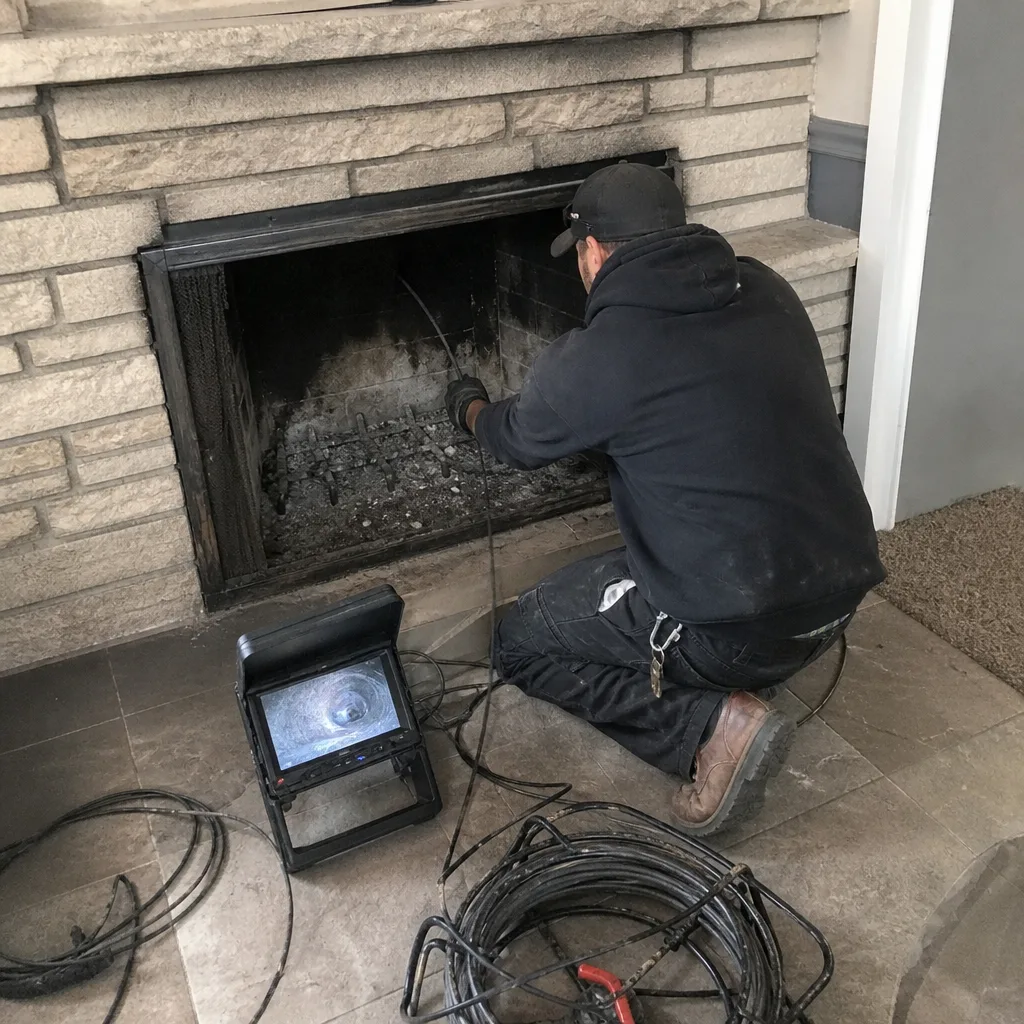
- The full flue interior via camera. A video scan documents cracks, gaps, missing mortar joints, and glazed creosote the eye can’t reach.
- The liner condition. Clay tile liners, stainless liners, and the joints between sections all get checked for damage.
- The firebox and smoke chamber. These are common places for heat damage and deterioration to hide.
- The crown and cap. Damage up top lets moisture in and heat out; both are checked and pictured.
- Surrounding framing and attic space. Heat can reach framing without visible flame. A Level 2 inspection checks for that.
- Connection points. The appliance connection and any joints are examined for gaps or separation.
You should expect a photo or video report along with the inspection findings – something you can look at yourself rather than take on faith. That’s the standard we hold to: nothing gets recommended that you can’t see the evidence for, and if a repair can safely wait, we’ll tell you that too. When flue damage needs resurfacing, HeatShield is a product we’re authorized to work with, which means the repair happens as part of the same relationship rather than a referral to someone else. If the fire found a problem in the firebox or the chimney structure, chimney repair and resurfacing can follow directly from the inspection that found it.
The Emergency Documentation Checklist for Cypress Homes
When a chimney fire actually happens, you’ll be standing outside watching the fire department work, and the last thing you want is to be searching for a policy number. Assemble this documentation now, in one place, physical and digital. It’s the unglamorous half of preparedness, and it’s the half that speeds up recovery.
- Utility shutoff locations and instructions. Know where your gas, water, and electric shutoffs are and how to turn each one off. Keep a photo of each location on your phone.
- Your homeowner’s insurance policy number and carrier contact. Store it in a shared digital note and a paper copy in a fireproof box or outside the home.
- Your credentialed sweep’s contact information. Save the number of the company that services your chimney, so you’re not scrambling to find one while smoke is still in the air. If you don’t have one yet, schedule your pre-season visit first.
- Photos of the chimney system before the season. Shoot the firebox, the hearth, the exterior chimney, and the cap while everything is clean and intact. These become your baseline if you ever need to document damage.
- A pre-fire home inventory. A walk-through video of each room is enough. Keep it off-site or in the cloud.
- Key contacts in one place. Insurance agent, your sweep, a neighbor or relative who can help, and the local non-emergency line.
What to photograph immediately after an incident:
- The firebox interior from several angles, before anything is cleaned.
- The hearth and the floor in front of it.
- The exterior chimney from the ground, including the cap and crown.
- The roof surface and gutters near the chimney.
- Any smoke or soot damage inside the room, on walls, and on furnishings.
- The fire department’s incident report or reference number, if they provide one.
Those photos and the incident report are what your insurer and your sweep will both want. Document first, clean later. A Cypress homeowner who has done this once will tell you it turns a chaotic day into a manageable one.
Creosote: The Fuel Load You Can’t See
Every chimney fire has a fuel source, and in a wood-burning fireplace that fuel is creosote – the tar-like residue left behind when wood smoke cools against the flue walls. Creosote builds in stages, from a light soot you can brush away to a hardened, glazed layer that burns fiercely once it ignites. The glazed stage is where emergency risk concentrates, because glazed creosote is both harder to remove and far more combustible. You can’t see it from the living room, and a fireplace that looks clean on the hearth can have a heavily coated flue.
How creosote accumulates faster than most people expect:
- Burning unseasoned or wet wood. Green or damp wood smokes more, and more smoke means more residue on the flue walls.
- Burning hot, fast fires after long disuse. A sudden hot burn on a coated flue is the classic trigger for ignition.
- Restricted draft. A partially closed damper, a blocked cap, or a flue that’s the wrong size for the appliance all slow smoke and let more of it condense.
- Infrequent sweeping. The single biggest factor. Creosote that gets swept regularly never reaches the glazed, dangerous stage.
The relationship between creosote and chimney fire is why preparedness always includes a sweep. A chimney sweep in Cypress removes the fuel load before it can be ignited, and the inspection that goes with it tells you whether the flue walls that held that creosote are still sound. In our experience, most homeowners are surprised how much builds up in a single season when they haven’t swept in a year or two. A professionally swept chimney with a sound flue is far less likely to see a serious fire, and that’s the whole point of the pre-season routine.
When Not to Light the Fireplace at All
Part of chimney fire preparedness is knowing when the right move is to skip the fire entirely. A fireplace is a controlled burn, and control depends on a sound system. If any of the conditions below are present, hold off until a professional has looked at the system.
- You haven’t swept or inspected in a long while and you burn regularly. A flue packed with creosote is a fire waiting for a hot night. Sweep first, burn second.
- Smoke backs into the room with the damper open. A draft problem can signal a blocked flue, a failing cap, or a flue that’s the wrong size – all worth diagnosing before you light up.
- You can smell creosote or burnt residue in the house when the fireplace is not in use. That lingering smell is a sign of buildup or backdraft.
- The damper sticks, doesn’t fully open, or won’t seal. Damper problems are a common precursor to smoky, inefficient, and unsafe burns.
- There’s visible damage to the firebox, flue, or crown. Cracks, loose mortar, or missing pieces all need repair before the next fire.
- You’ve had a chimney fire or a back-puff event since your last inspection. The system needs a post-fire inspection before reuse, full stop.
- Santa Ana conditions are in effect and your system hasn’t been checked this season. Wait, or get the check first. The risk-to-reward ratio tips the wrong way on a dry, windy night.
Choosing not to light the fire isn’t losing a cozy evening; it’s saving your house from a situation you don’t want to be in. We’d rather a Cypress homeowner call for a fireplace repair before the season than after a fire, and we say that because we’ve seen both paths. The repair is almost always smaller when it comes first.
Common Mistakes to Avoid
- Treating the first fire of the season as a normal fire. It’s the most dangerous burn of the year because the flue has had months to coat and settle. Sweep and inspect before it, not after.
- Using an extinguisher in the firebox during a chimney fire. A dry-chemical spray into the firebox does nothing for a fire up in the flue and can worsen the room conditions. Extinguishers are for fires on the hearth or surrounding materials.
- Climbing onto the roof during an active fire. Roof access during a chimney fire is a leading cause of homeowner injury. Wet the roof from the ground with a hose if you can, and otherwise stay off the ladder.
- Relighting the fireplace after a chimney fire without an inspection. A fire can leave the flue visibly intact and structurally compromised. A Level 2 inspection is what catches that, and skipping it is the most common post-fire mistake.
- Ignoring Santa Ana conditions when planning burns. Many Cypress households plan by the calendar rather than the wind. If the winds are up and the system hasn’t been checked this season, postpone.
- Relying on a generic building-supply cap. A cap that isn’t purpose-built for a chimney may not seal correctly or last through the winds. We use Famco and Copperfield hardware for a reason.
- Not having documentation ready. Insurance policy number, sweep contact, and pre-season photos should all be assembled before you need them, not while you’re standing in the yard watching the fire department work.
See the difference
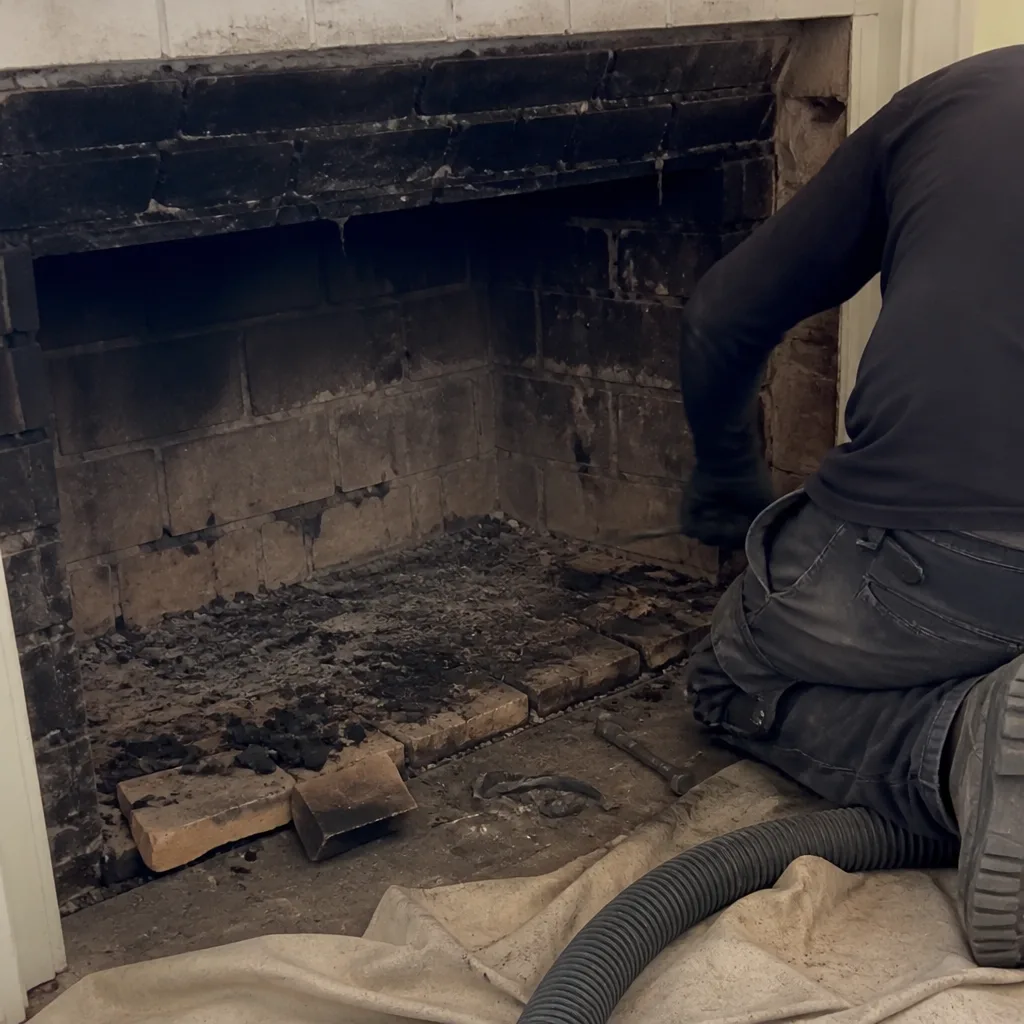 Before
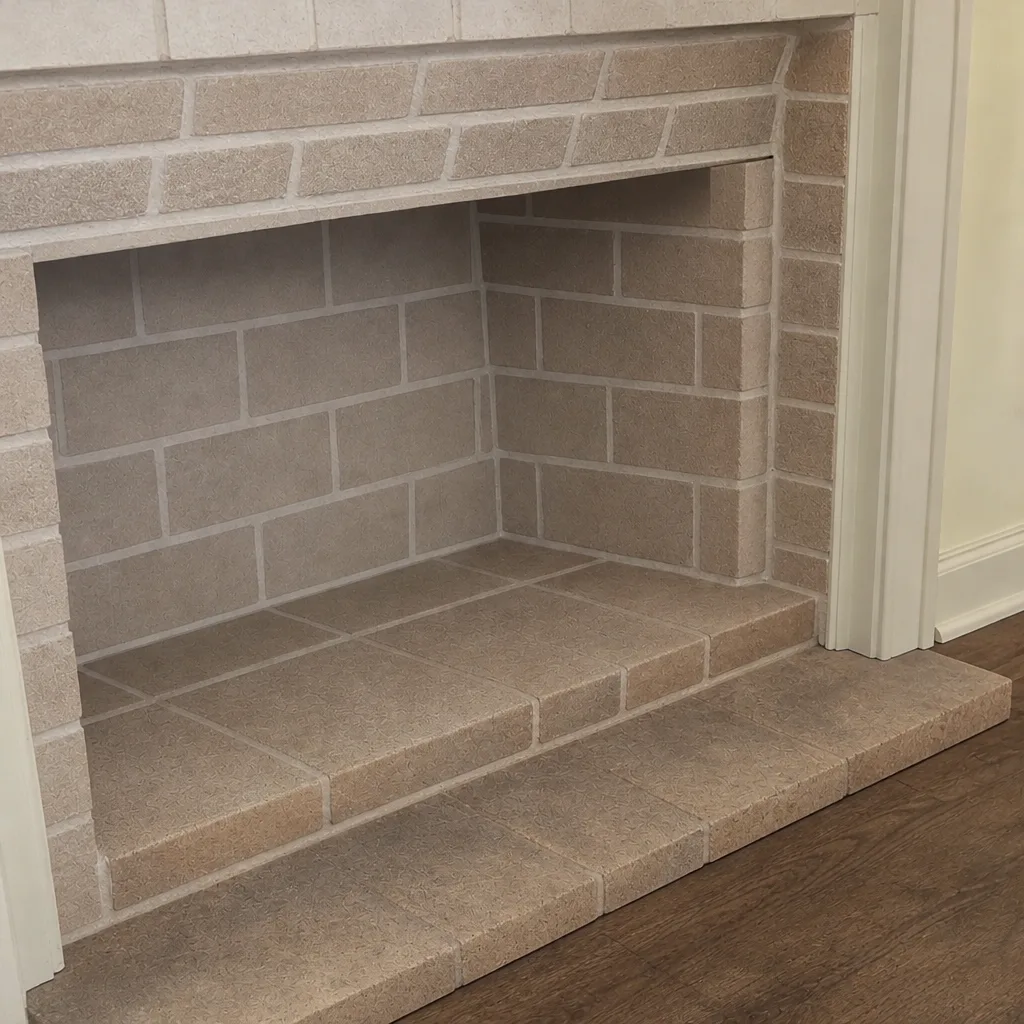 After
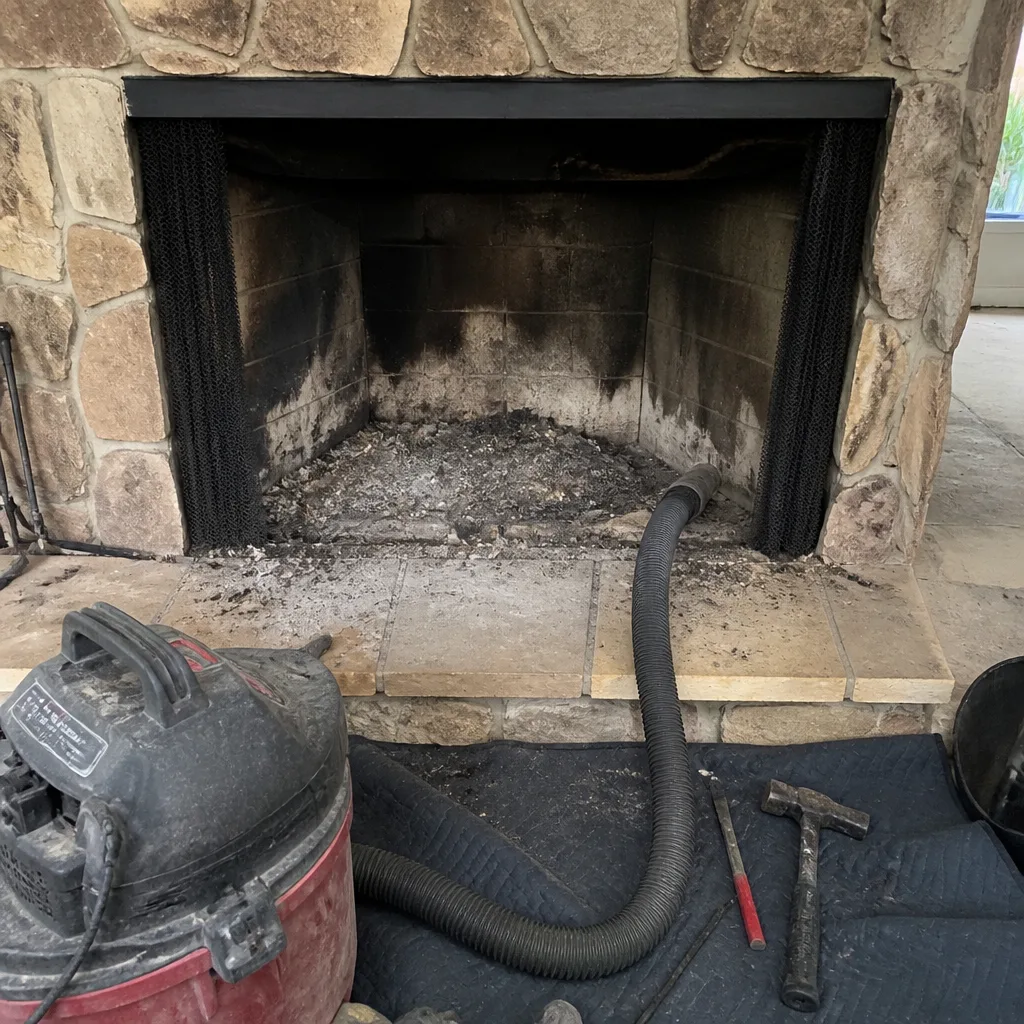 Before
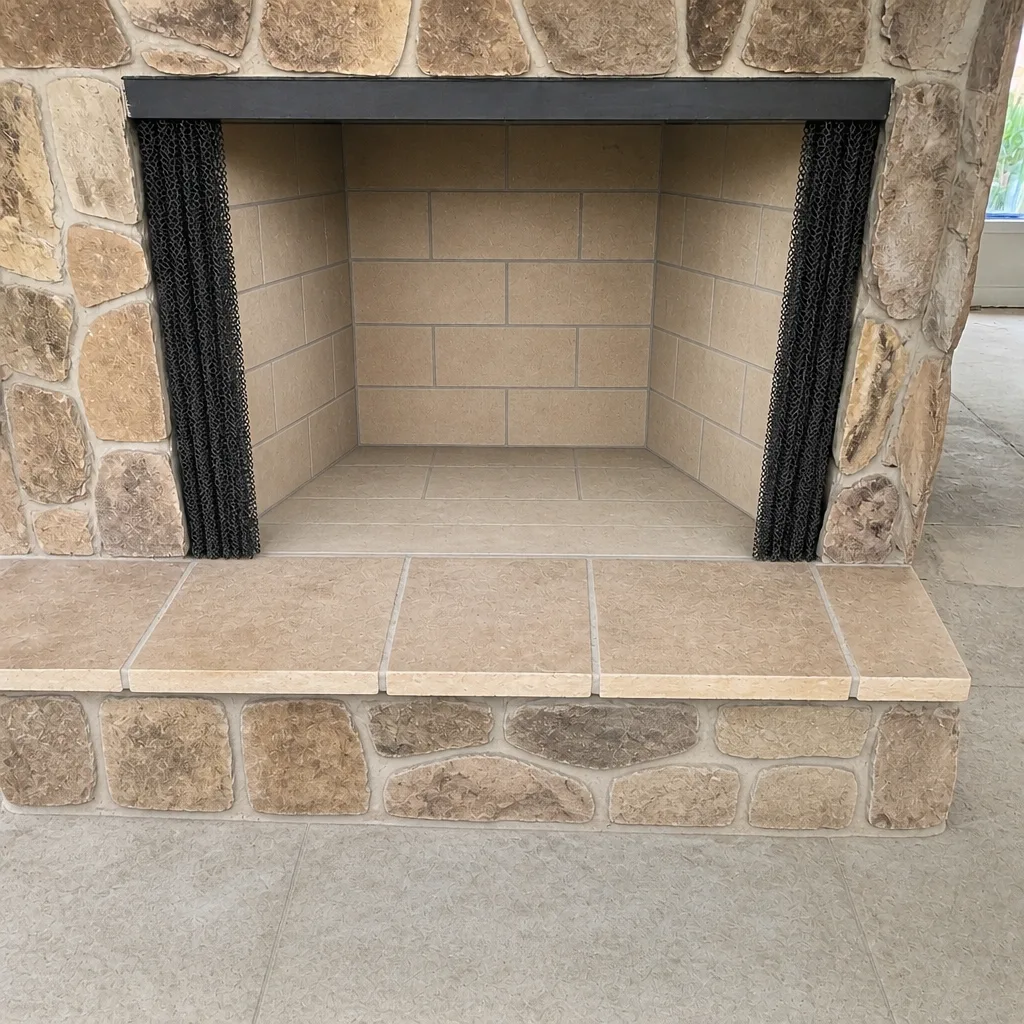 After
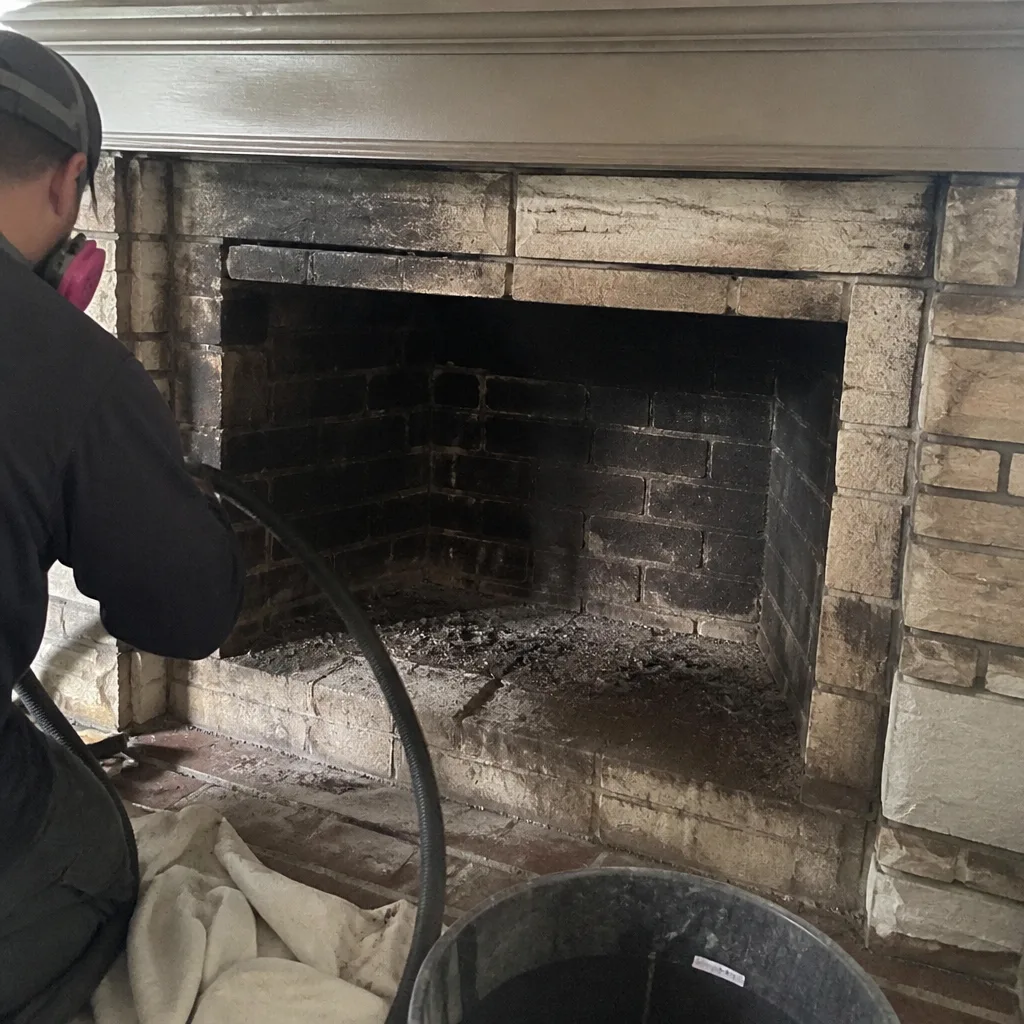 Before
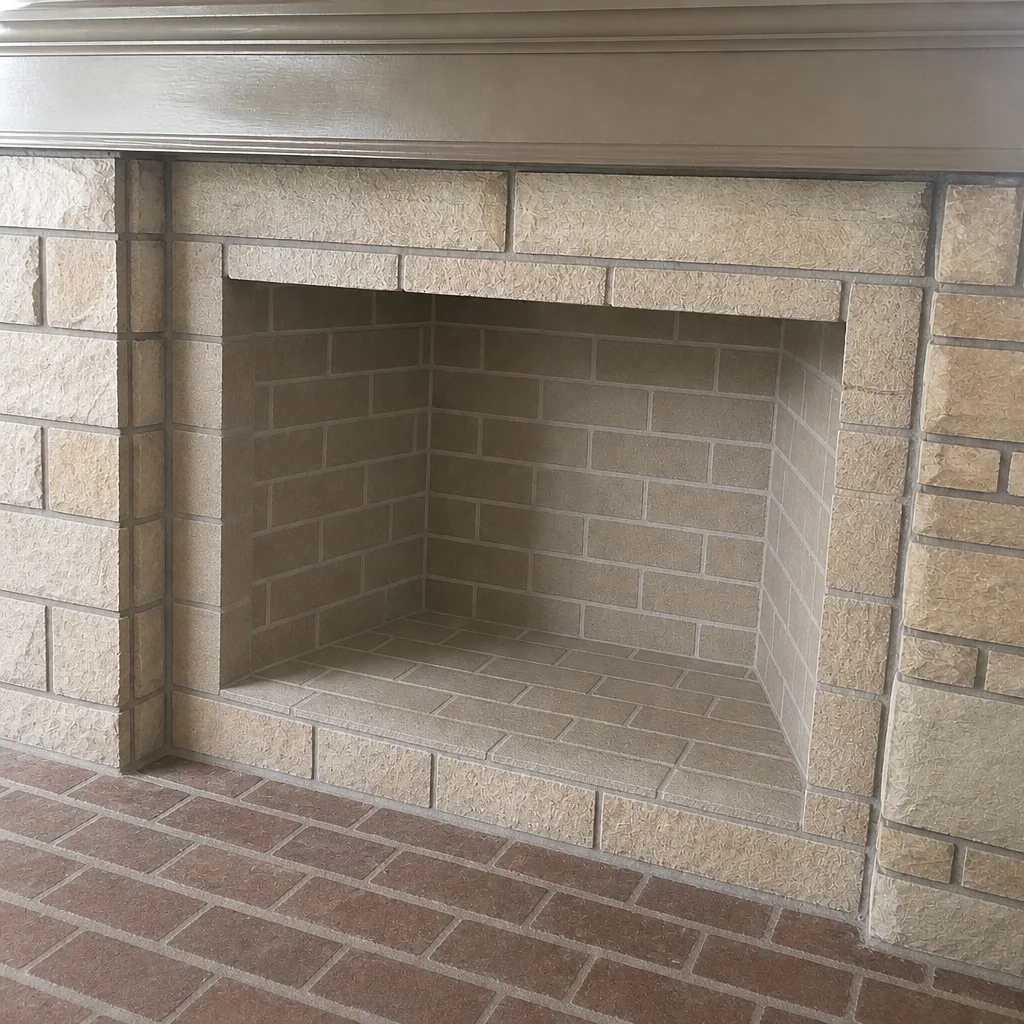 After
When to Call a Professional
Call a professional sweep or chimney specialist before the season begins if you burn wood regularly and haven’t had the flue cleaned and inspected; if you notice a strong creosote smell when the fireplace is off; if smoke backs into the room with the damper open; if the damper is sticky or won’t seal; or if you’ve had any prior chimney fire or back-puff event. In an active fire, the first call is 911, not us. After the fire department clears the structure, the next call is for a Level 2 inspection before any reuse. Cypress Chimney Sweep Pros offers free estimates in Cypress – call (877) 492-3411. The sweep, the inspection, and any needed repair all come from the same team, and nothing gets recommended without camera evidence you can see for yourself.
Frequently Asked Questions
A chimney sweep in the Cypress market typically falls in the $150 to $300 range, and pricing is set per job by the written estimate. The sweep itself removes the creosote that fuels chimney fires, and it’s usually paired with an inspection. Call (877) 492-3411 for an exact quote – estimates are free.
The most reliable signs are a freight-train or whooshing sound from the chimney, a sharp burning or hot-tar smell, popping or clicking that continues after the fire should have settled, and visible smoke or sparks at the top. If any of those happened, treat it as a real event and get a professional inspection before relighting. Call (877) 492-3411 to schedule one.
Once a year during regular use is the general benchmark, and more often if you burn heavily or notice buildup or draft problems. In Cypress, the practical rule is to sweep before the season rather than after it, so the flue is clean going into fire season. Call (877) 492-3411 to book your pre-season sweep.
Yes. Dry, strong Santa Ana winds lower humidity, dry out surrounding vegetation and materials, and make it easier for sparks and burning creosote to spread if they escape the flue. They can also change draft behavior in ways an unsound flue can’t handle. A pre-season sweep plus a cap and crown check is the preparation that directly addresses this. Call (877) 492-3411 for a free estimate.
A Level 2 inspection scans the full flue interior with a camera, checks the liner and its joints, examines the firebox and smoke chamber, reviews the crown and cap, and looks for heat damage in nearby framing and attic space. You get a photo or video report you can see yourself, so no one is asking you to take hidden damage on faith. Call (877) 492-3411 to arrange it.
No. Even a short fire can crack flue tiles or separate a liner joint without visible signs, and relighting a compromised flue is how a contained fire becomes a house fire. A Level 2 inspection is what determines whether the system is safe to reuse. Call (877) 492-3411 before you light the next fire.
The Bottom Line
Chimney fire preparedness in Cypress comes down to a season-before routine and a memorized response if it’s ever needed. Clean the flue before the first fire, inspect the full system on the same visit, confirm the cap and crown are sound, clear the roof and gutters, and know the first-90-seconds protocol cold. Keep your documentation – policy number, sweep contact, pre-season photos – assembled and accessible. If a chimney fire does happen, 911 first, then a Level 2 inspection before any reuse. Everything before the fire is easy; everything after it is not. Your entire chimney system – cleaned, inspected, and protected – is what we handle, and preparation is where we’d start.
Ready to get ahead of the season? Call (877) 492-3411 for a free estimate. We answer 24/7. Fast dispatch from 7am to 7pm, Sunday through Friday. The team that inspects your chimney is the same team qualified to repair it, so what we find is what we fix – no referrals, no runaround.
Written by the team at Cypress Chimney Sweep Pros.