
Last updated November 25, 2026
 Sweep & inspection
 Caps & crowns
 Flue relining
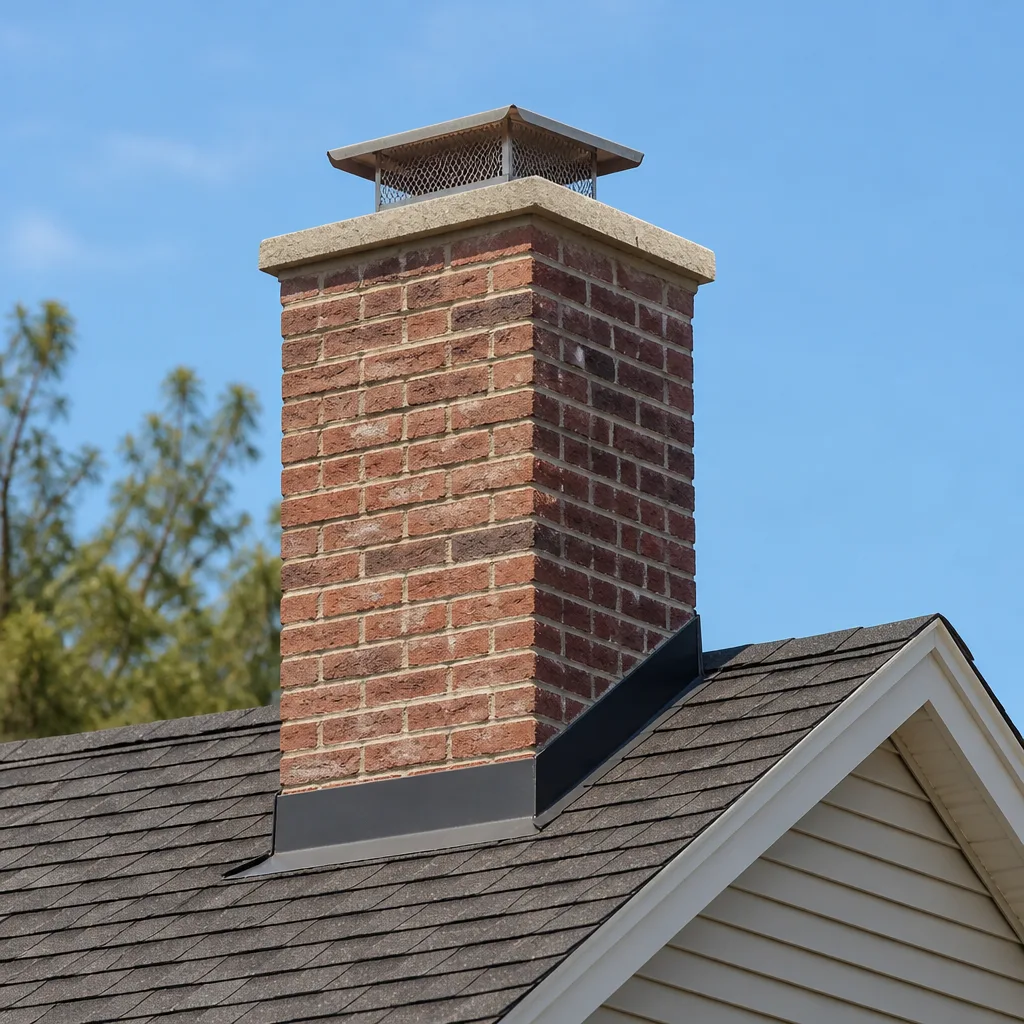 Masonry repair
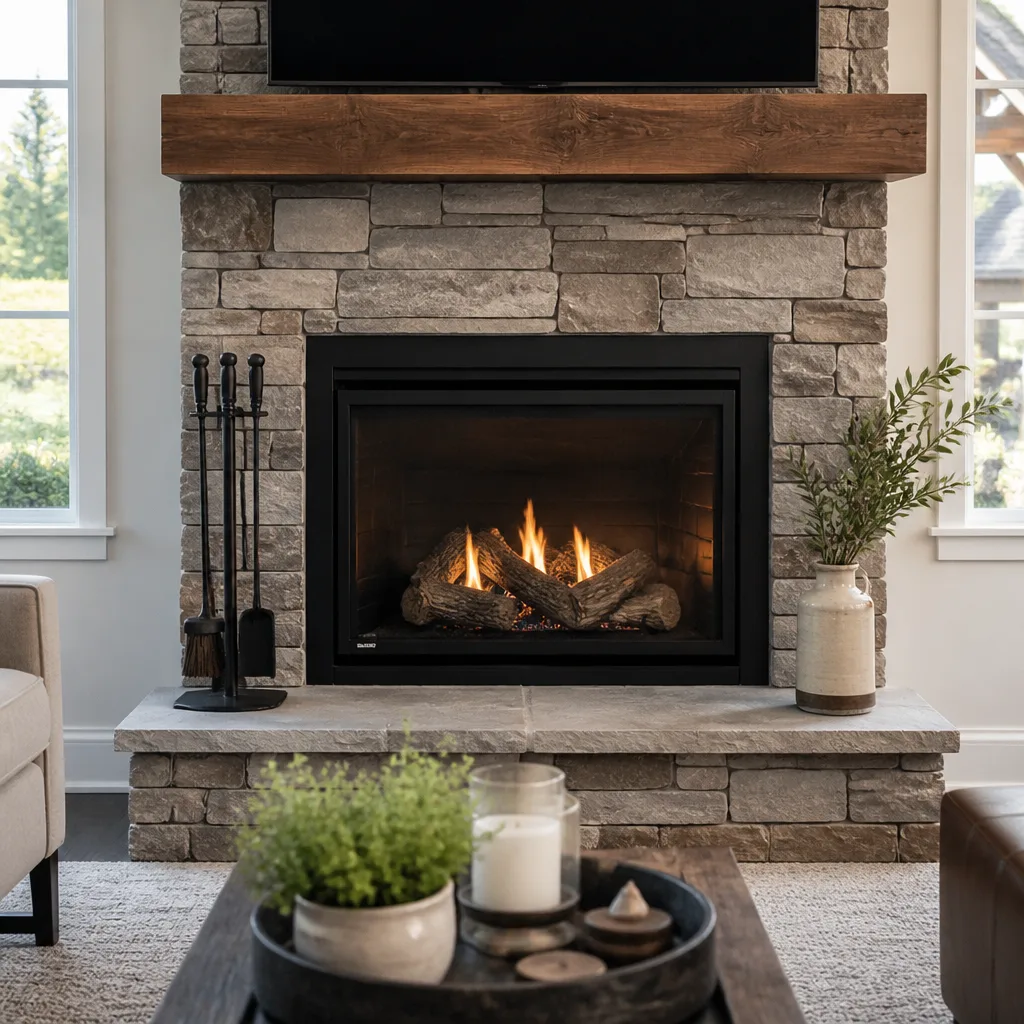 Gas fireplace service
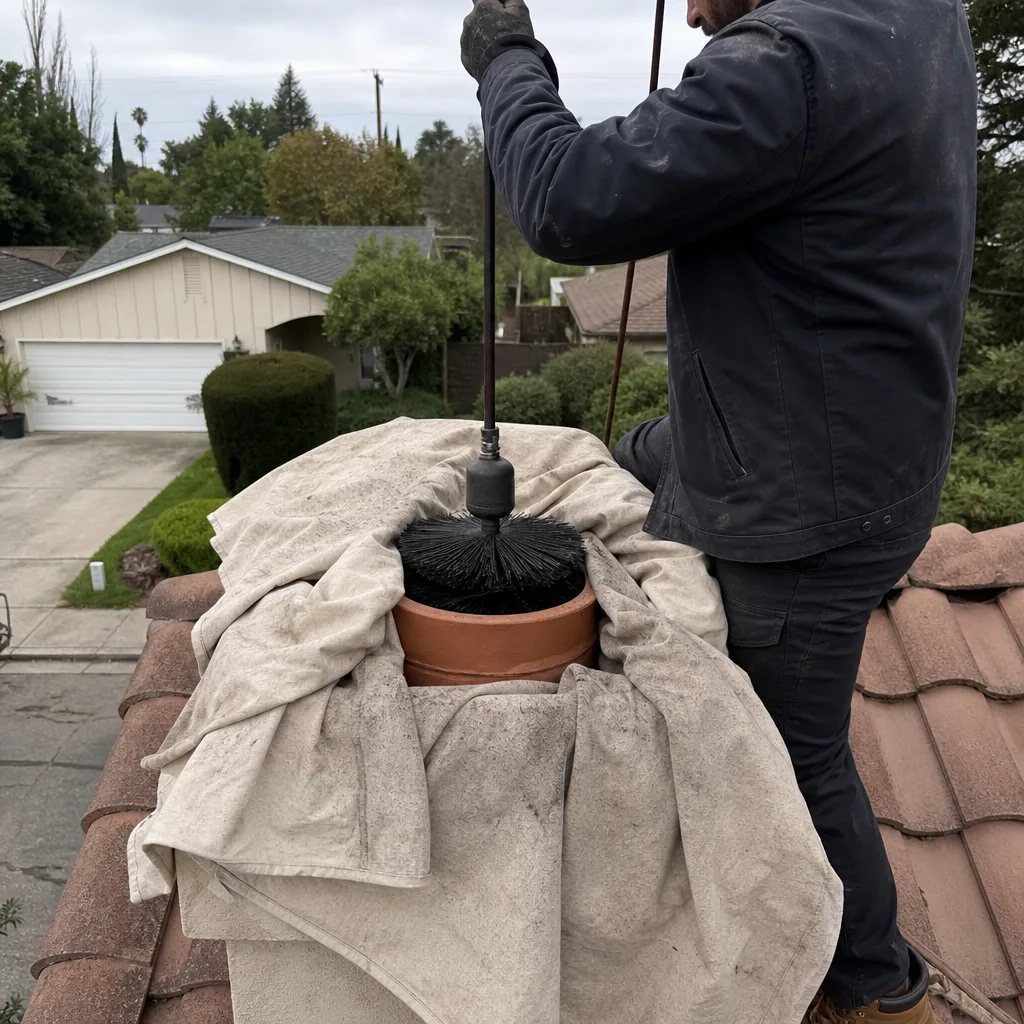
Level 1 sweep and inspection to the NFPA 211 annual standard - flue, crown, cap, and flashing checked and photographed
Chimney sweep logs do not sweep chimneys. They loosen some creosote - which then falls where a brush and vacuum still have to collect it.
DIY vs Professional Chimney Cleaning: The Cypress Homeowner’s Decision Guide
You can buy a flue brush kit for the price of a decent dinner out, and plenty of Cypress homeowners do exactly that. The part almost nobody explains is that a brush on a rod only touches one of the three parts that actually decide whether your chimney is safe. The flue gets clean; the smoke chamber and the firebox joints, where creosote really collects and where cracks start, stay exactly as they were. This guide is about figuring out which of those components you can honestly assess yourself, and which ones need someone with the right tools and the training to read them. We’ll walk through what a DIY kit really does, the narrow set of conditions where brushing your own flue makes sense, and a five-question decision tree you can run in about three minutes.
Quick Answer
DIY flue brushing is a defensible choice only when three conditions line up: the home is new to you, there’s documented recent professional service on the system, and any gas conversion happened within the last five years. For everything else, a professional sweep is the safer call, because the fire risk in most Cypress homes sits in the smoke chamber and firebox joints that a brush kit never reaches. If you can’t verify the service history, treat the chimney as unswept.
Styles & brands we work with
- Sweep & inspection
- Caps & crowns
- Flue relining
- Masonry repair
- Gas fireplace service
Table of Contents
- What a DIY Rotary Brush Kit Actually Cleans
- The Three Conditions Where DIY Cleaning Makes Sense
- What a HEPA Vacuum Rated for Soot Costs vs. a Shop Vac
- Documentation, Insurance, and the “Cleaned and Inspected” Problem
- The Five-Question Decision Tree for Cypress Homeowners
- Why the Smoke Chamber Is the Part That Gets Missed
- Gas Logs and Inserts Change the Cleaning Equation
- What a Professional Visit Includes That DIY Doesn’t
What a DIY Rotary Brush Kit Actually Cleans
A rotary brush kit cleans the inside face of the flue. That’s it. It’s a real service, and on a straight, sound flue it does remove the soft, powdery creosote that builds up from normal wood burning. The scope boundary matters because it’s narrower than most people assume when they see “chimney brush” on the box.
Here’s the honest breakdown of what a DIY kit addresses and what it leaves alone:
- Flue walls (first stage creosote): covered. A brush scrubs it down.
- Glazed third-stage creosote: not covered. That hardened, tar-like layer needs rotary equipment with cutting heads, and scraping at it with a hand brush can pack it tighter.
- Smoke chamber: not covered. The angled shelf above the damper is where creosote collects in volume, and it’s above the reach of a straight rod from the firebox.
- Firebox joints: not covered. The mortar seams between firebrick crack under heat cycling, and hairline cracks let heat reach the masonry behind them.
- Flue liner condition: not covered. A brush passes through a cracked or spalling liner without telling you the liner is compromised. That’s a camera and visual inspection job.
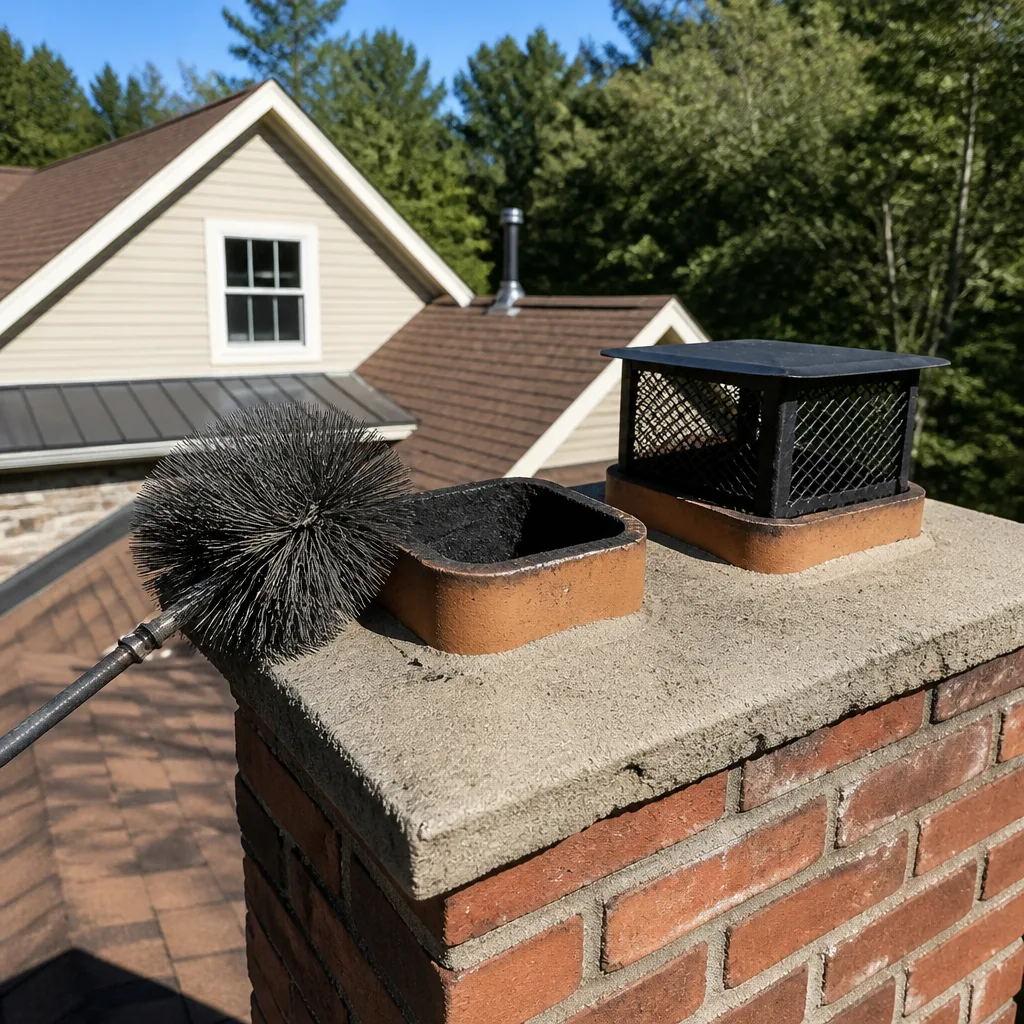
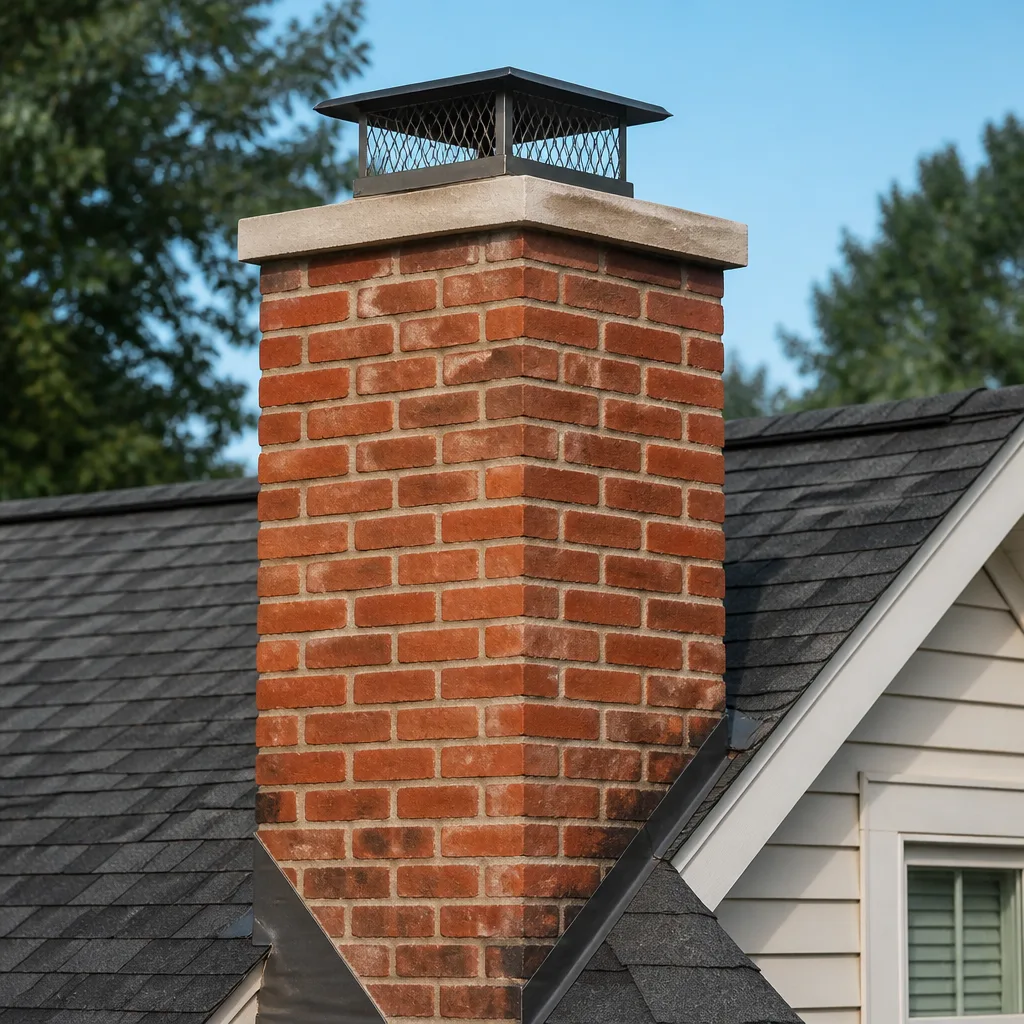
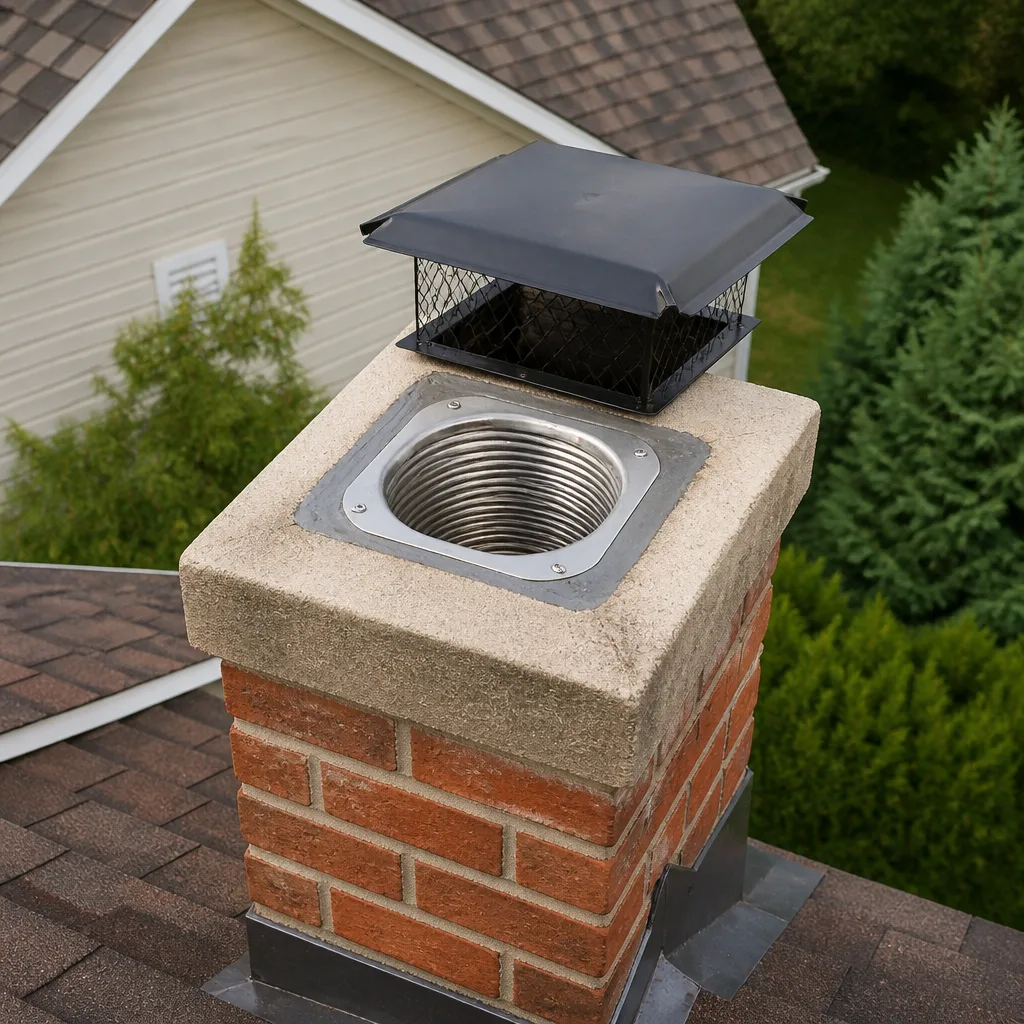
- Crown and cap: not covered. The top of the chimney is where water gets in, and brushing does nothing about it.
In our experience across Cypress homes, the flue is rarely the problem area once it’s been brushed. When we run a camera and find something alarming, it’s usually in the smoke chamber or at the firebox seams, and those are exactly the areas a hand brush never contacts. So when a homeowner tells us they brush their own flue, the fair question isn’t whether they did a good job. It’s what the brush passed straight through on the way up.
The one thing a DIY kit does well is the routine flue refresh on a system that was already verified sound by a professional. That’s a legitimate role. It’s just a much smaller role than the marketing on the box suggests.
The Three Conditions Where DIY Cleaning Makes Sense
DIY cleaning is defensible in Cypress in exactly three situations. Miss any one of them and the calculus shifts toward a professional sweep.
- You just bought the home and the previous owner left documentation. If there’s a written inspection record from a credentialed sweep showing the liner, smoke chamber, and firebox in sound condition, and that record is recent relative to how much the fireplace was used since, you have a known starting point. Brushing the flue preserves that baseline. Without the paperwork, you’re brushing a system whose condition you don’t actually know.
- The service history is documented and recent. A professional sweep that included camera inspection and left a report, with only light wood burning since, means the flue worth brushing is the flue you’re brushing. “Recent” means the last season or two, not five years ago.
- The fireplace was converted to gas within the last five years. Gas logs produce far less creosote than wood, and the conversion itself should have come with an inspection of the old wood-burning system. Inside that five-year window, the residual buildup is typically light and the flue is the main concern.
Notice what all three have in common: an outside verification already exists. DIY cleaning isn’t a substitute for that verification; it’s maintenance on a system someone qualified already checked. Cypress has plenty of homes where the fireplace saw heavy wood use for years before a gas conversion or a sale, and in those homes the three conditions break down quickly.
If none of the three apply, the sensible move is to have the system assessed once by a professional, then decide whether annual maintenance is worth doing yourself. Many homeowners settle into exactly that rhythm: professional inspection and cleaning up top, light brushing or none in between.
What a HEPA Vacuum Rated for Soot Costs vs. a Shop Vac
Here’s the cost comparison almost nobody does before starting: the vacuum. A standard shop vac that’s fine for sawdust will blow fine soot particles straight back into the room air, and soot that settles into carpet, upholstery, and ductwork is a genuine contamination problem in a home. A HEPA vacuum rated for chimney soot, meaning one that captures particles down to the fine range, is what a professional sweep runs, and the equipment cost for a homeowner to buy the same class of unit tends to run several times what the brush kit cost.
Put the two costs side by side:
- Brush kit and rods: modest one-time cost, and the tools are reusable.
- HEPA vacuum rated for soot: the larger expense, and the piece most DIY setups skip.
- Drop cloths, sealing tape, respirator: small but necessary, and skippable if you’re not thinking it through.
- Contamination risk if you skip the HEPA unit: an entire room’s fabrics and soft surfaces potentially affected.
What we see in Cypress is that homeowners factor in the brush and forgot the vacuum entirely. The result is a flue that got scrubbed while the living room took the dust. If the phrase “we’ll just open the damper and go” is part of your plan, stop there. Soot under negative pressure goes where the air goes, and it does not go neatly up the flue without the right machine pulling it.
The vacuum question alone rebalances the cost argument for a lot of homeowners. Add up a proper HEPA unit, the sealing materials, and the time, and professional cleaning often comes out comparable for a single visit, with documentation and inspection included.
Documentation, Insurance, and the “Cleaned and Inspected” Problem
This is the part that carries the most weight and gets the least attention. When you clean your own chimney and then tell your insurer or a future buyer that the chimney was “cleaned and inspected,” you’re self-certifying a system you can’t fully evaluate. That’s a different thing from a credentialed sweep producing a written report.
Think about who receives that claim and what it means to them:
- Your insurer. After a chimney fire or a carbon monoxide event, an adjuster will ask who serviced the chimney and when. A documented professional report is straightforward. A homeowner’s own assurance that they cleaned it is not evidence of anything, and it can complicate a claim.
- A buyer’s inspector. When you sell a Cypress home, the buyer’s inspector will look at the chimney and ask for service records. A professional report answers the question cleanly. No records means the buyer has to assume the system needs work, and that gets negotiated into the price.
- The next technician. A documented service history lets the next professional start from a known baseline rather than a blank slate. That baseline is worth real money in avoided unnecessary work.
Self-certification isn’t illegal. Nobody’s going to knock on your door for brushing your own flue. But “cleaned and inspected” in a written sense means something specific: a credentialed person looked at the whole system and put their findings on paper. When a homeowner uses that phrase for their own brushing, they’re taking on the liability of an inspection they didn’t actually perform.
If you go the DIY route, be precise about what you did. Say “I brushed the flue,” not “I had the chimney cleaned and inspected.” The distinction matters when it comes up later, and it will.
The Five-Question Decision Tree for Cypress Homeowners
Run these five questions in order. Answer honestly, because the whole point is routing yourself accurately rather than talking yourself into the cheaper option.
- Do you have a written inspection report from a professional within the last two years? If no, route to professional. You need the baseline before anything else. If yes, continue.
- Has the fireplace been used for wood burning since that report, and roughly how much? Light seasonal use points toward DIY maintenance being reasonable. Heavy use points to professional. If you can’t remember, route to professional.
- Is the system gas, wood, or a wood-to-gas conversion? Gas with a documented conversion inside five years, and you can continue. Wood, or a conversion older than five years, route to professional. An old conversion needs the original wood system checked again.
- Do you have a HEPA vacuum rated for chimney soot, plus sealing materials for the fireplace opening? If no, route to professional or budget for the equipment before you start. Brushing without the vacuum is a net negative for the room.
- Does the system have any visible liner, crown, or firebox concerns you’ve noticed, like spalling, cracks, or staining on the exterior? Any yes, route to professional. Those are inspection findings, not cleaning findings, and a brush won’t tell you anything more about them.
The routing logic is straightforward: professional unless all five answers point the other way. In practice, a Cypress homeowner who can pass all five is in the minority of homes we look at. That’s not a knock on the homeowner; it’s a reflection of how many Cypress homes have years of undocumented wood burning behind them.
Answered all five and landed on professional? Good. Now you know exactly what to ask for, which is the beginning of a productive service call. The visit isn’t just a sweep; it’s the inspection that establishes your baseline for every decision after it.
Why the Smoke Chamber Is the Part That Gets Missed
The smoke chamber is the angled space between the top of the firebox and the start of the flue. It exists to funnel smoke from the wide firebox into the narrow flue. It also has corrugated, sloping walls, and creosote clings to those walls far more readily than to the smooth flue pipe above.
This is where a good deal of the fire risk in a chimney actually lives. Creosote that builds up on the smoke chamber walls is baking all season long, and the heat from the firebox vents straight into it. On a chimney fire call, this is the area we look at first, because a brush from below physically cannot reach the upper chamber wall, and a camera from above is the only way to see it.
The fix, when we find this buildup, is a resurfacing of the smoke chamber to smooth the walls and eliminate the corrugated surface creosote loves. That’s specialized work, and it falls under the chimney repair side of what we do rather than basic cleaning. It’s not something a homeowner can perform with a brush kit, and it’s not something that should be ignored simply because the flue looks clean from below.
When you do have a professional visit, ask specifically whether the smoke chamber was inspected and documented. A sweep that only brushes the flue and never looks at the smoke chamber has done half the job, no matter how thorough the flue cleaning was. This is the single most useful question a Cypress homeowner can ask when booking.
Gas Logs and Inserts Change the Cleaning Equation
Gas fireplaces have their own cleaning profile, and it isn’t simply “less creosote, so skip it.” Gas logs are cleaner in the creosote sense because there’s no wood smoke condensing on the flue, but they come with different concerns worth understanding before you assume gas means low maintenance.
A gas fireplace still needs periodic attention:
- The firebox itself. Dust, pet hair, and soot accumulate around the log set and the burner. This affects how the logs burn and how they look, and it’s the most common reason gas logs start producing visible soot on the glass or the stone.
- The venting path. A direct-vent gas appliance is a different system from an open masonry fireplace, and it has its own service considerations. Venting that was added to an existing chimney during a conversion deserves at least one professional look to confirm it was sleeved and terminated correctly.
- The firebox joints. Even with gas, heat cycling over years affects the masonry around the firebox. That’s the same firebox-joint issue we discussed for wood, just on a longer clock.
For the gas side of a system, the service most Cypress homeowners end up needing isn’t a sweep so much as a professional clean and check of the firebox and burner, which we handle as part of fireplace repair and service work. If your gas logs smell like anything other than burnt dust when they first come on each season, or if the flame pattern has shifted, that’s a call rather than a cleaning task.
One safety note here: carbon monoxide risk is real with any combustion appliance, gas included, and it doesn’t announce itself. A functioning carbon monoxide alarm in the room with the fireplace is the baseline, and if your chimney or the venting was converted or altered at any point, a professional check of the venting path is worth doing before a season of regular use.
What a Professional Visit Includes That DIY Doesn’t
A professional chimney visit in Cypress isn’t just a better flue brush. It’s a different scope of work, mounted on the right equipment, ending in a document you can actually use. Here’s what a standard visit covers from the firebox up:
- Visual inspection from the firebox through the flue and to the cap. We look at the firebox joints, the damper, the smoke chamber, the liner, the crown, and the cap, and we note condition at each point.
- Camera inspection of the flue. A camera down the flue is the only way to see cracks, spalling, or glazed creosote that a brush passes over without complaint. It’s also what produces the documentation you can hand to an insurer or a buyer.
- Professional sweep with HEPA equipment. The flue gets brushed with the right rods and heads for the buildup present, under negative pressure, with the fireplace opening sealed so soot stays in the vacuum, not the room.
- Smoke chamber and firebox attention. The chamber gets cleaned and assessed, and where glazed buildup or corrugated-wall creosote is found, we can discuss resurfacing, which we do using HeatShield products specifically for that application.
- Crown and cap assessment. Water intrusion at the top of the chimney is a year-round Cypress concern, not a seasonal one. We check the crown for cracks and the cap for fit and function, and when replacement or installation is called for, we use purpose-built chimney hardware from Famco and Gelco rather than generic building-supply pieces.
- Written report with findings and photos. Every visit ends with the condition documented, so you know exactly what you’re starting from and what, if anything, needs attention.
Where we go beyond a cleaning-only crew is in what happens after the inspection. If the report shows a liner issue, we can address it with a liner from DuraFlex or Olympia Chimney. If the flue needs resurfacing, we perform that work directly. The team that inspects the chimney is the same team qualified to repair it, which means you don’t get a report and then a separate search for a repair crew.
That full-system scope is why a professional visit produces more than a clean flue; it produces a complete picture. A homeowner can get the flue clean easily enough. The value of a professional visit is everything around the flue, and it’s the part that keeps you safe and keeps your documentation usable years down the road.
Common Mistakes to Avoid
- Brushing the flue and declaring the chimney “cleaned and inspected.” Those are two different claims, and the second one is an inspection you didn’t actually perform. Be precise about what you did when you talk to your insurer or a buyer.
- Using a standard shop vac inside the home. Fine soot goes straight through the filter and settles into the room. A HEPA unit rated for chimney soot is the only vacuum that keeps the cleaning from becoming a contamination event.
- Skipping the smoke chamber because the flue looked fine. The chamber is where a lot of creosote builds, and it’s the area you can’t see from the firebox. A flue that brushes clean tells you almost nothing about the chamber above it.
- Assuming a gas conversion means the chimney no longer matters. The original wood system’s condition doesn’t go away when the logs change. The firebox joints and the venting path both still need a professional look.
- Brushing glazed, tar-like creosote. Third-stage creosote needs rotary equipment with cutting heads. A hand brush doesn’t remove it, and it can compact it further against the flue wall.
- Overlooking the crown and cap because they’re not part of the flue. Water intrusion from the top of the chimney is a year-round issue in Cypress, and it does more long-term damage than creosote in many homes.
- Cleaning without paperwork and then forgetting when it happened. The date and findings are half the value of any service. Keep the record, or the next decision is made from zero information.
See the difference
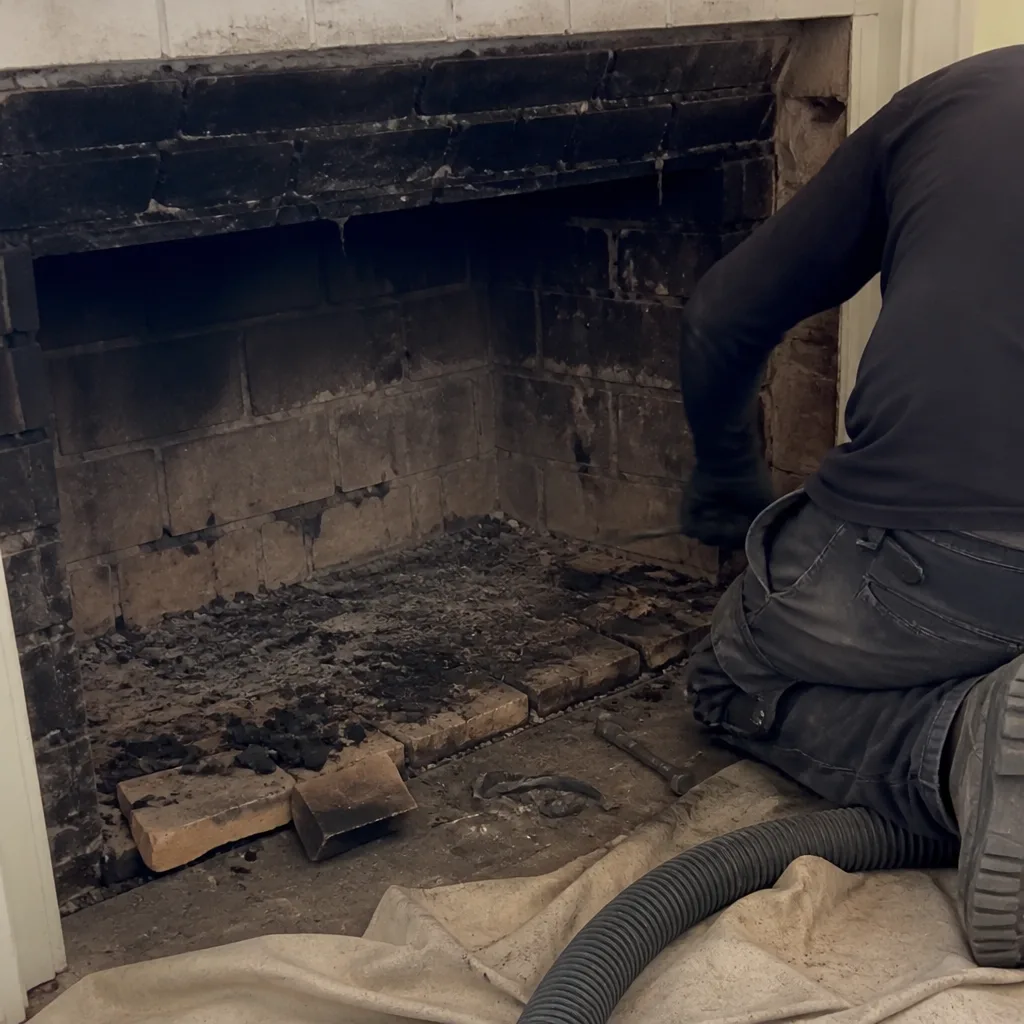 Before
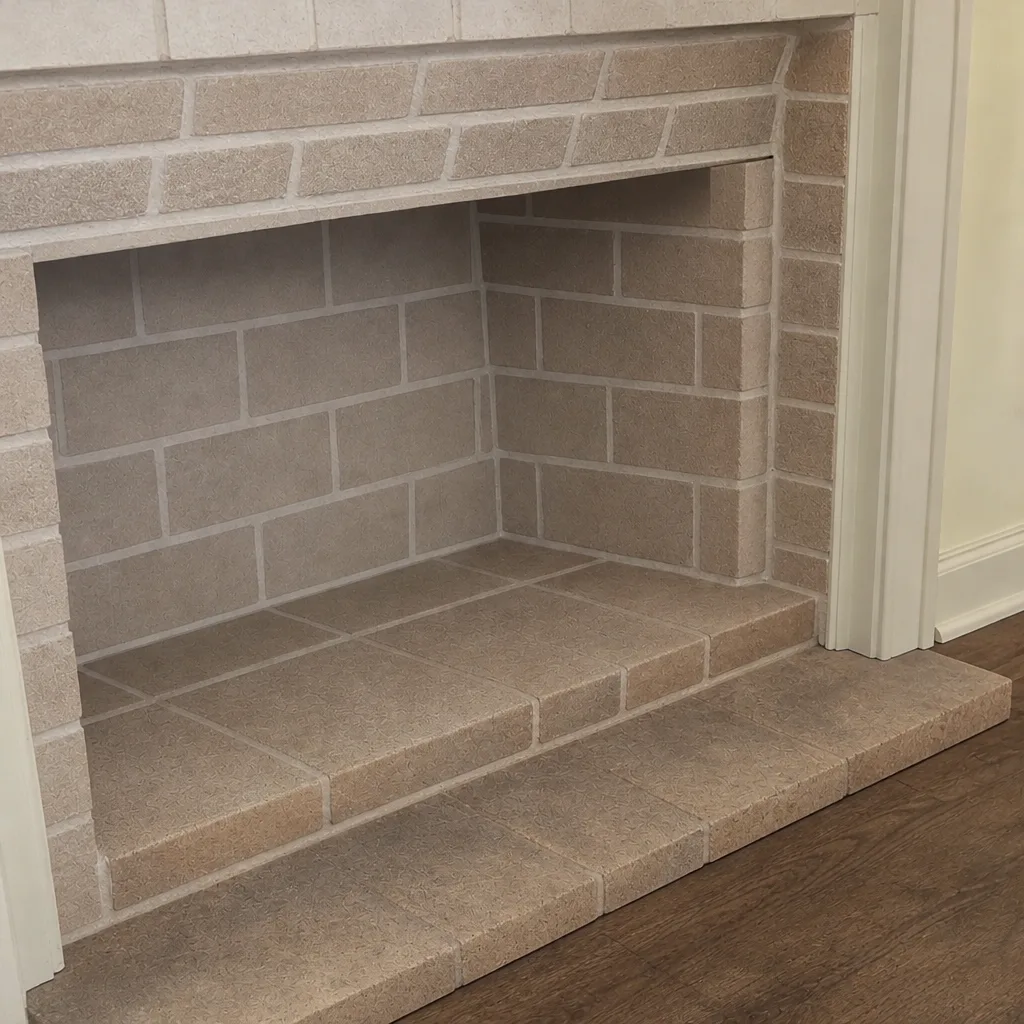 After
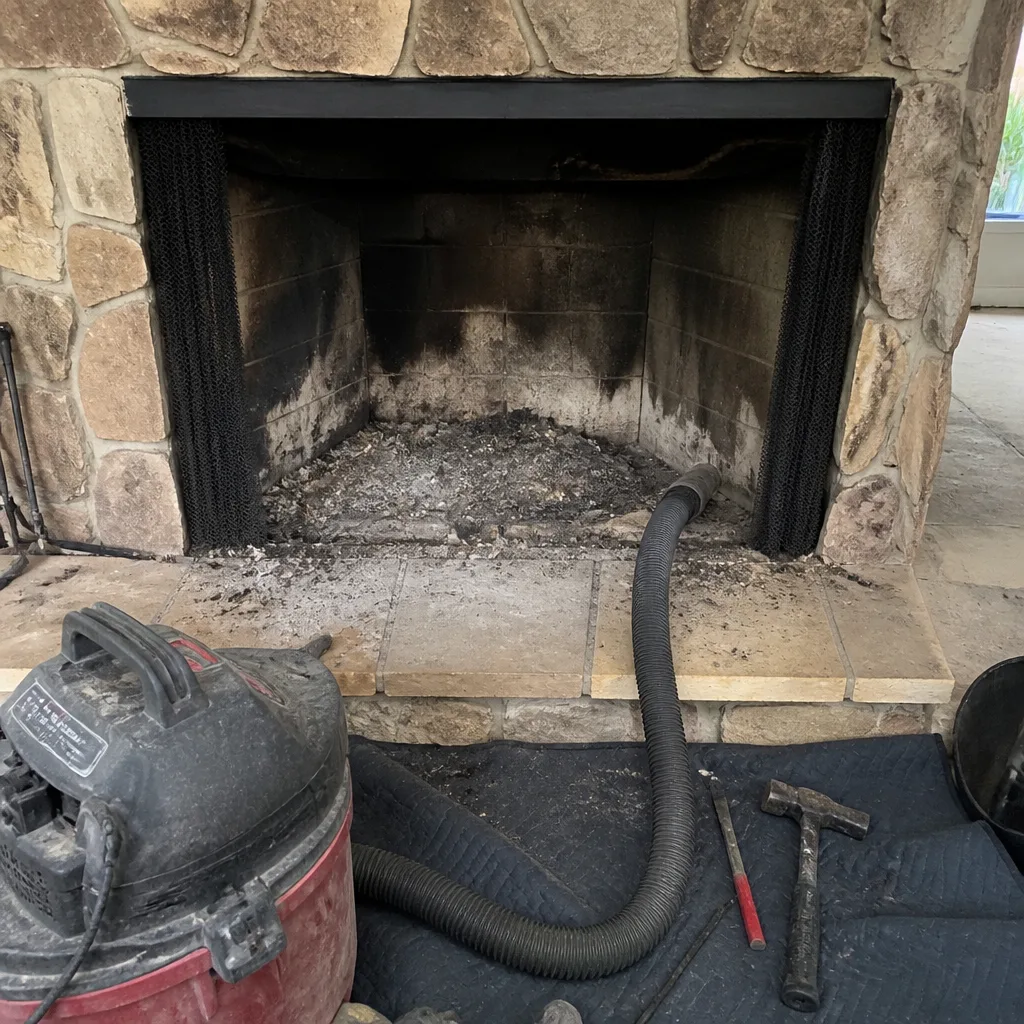 Before
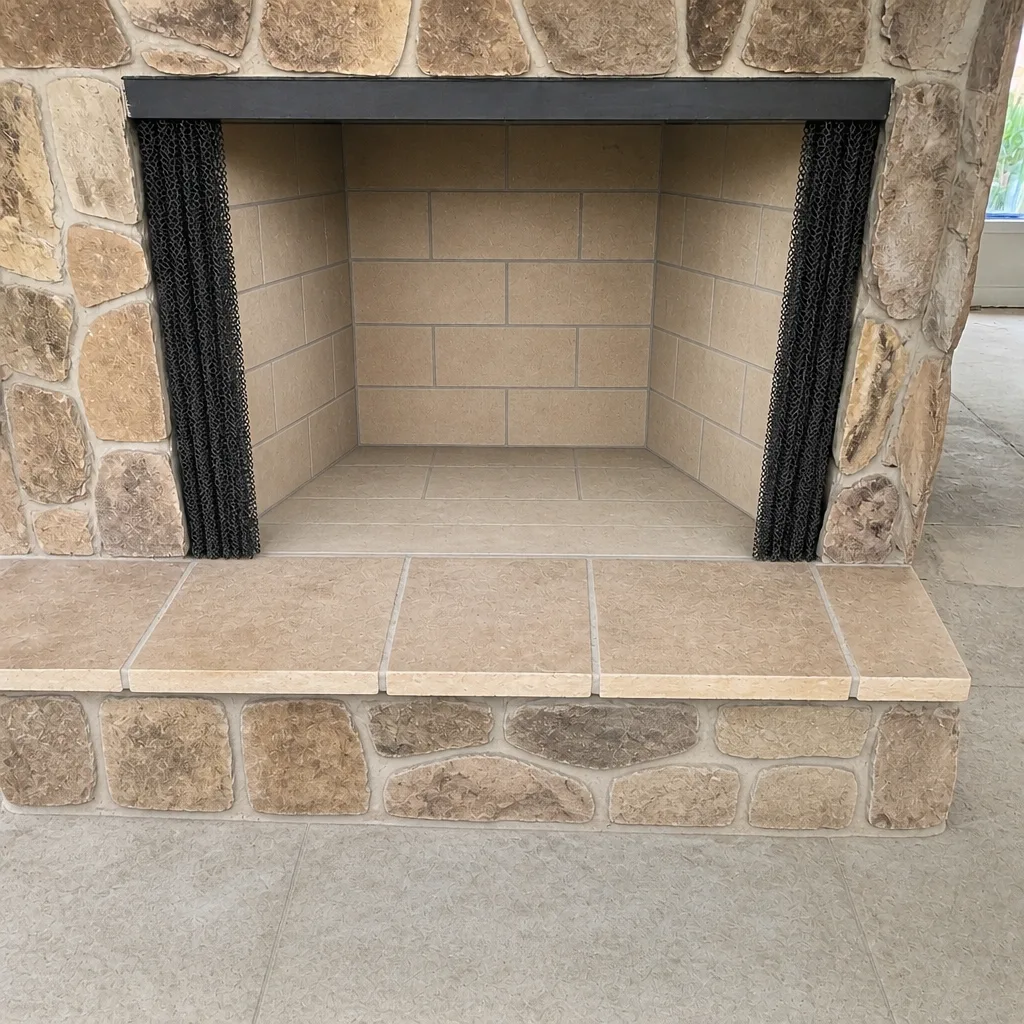 After
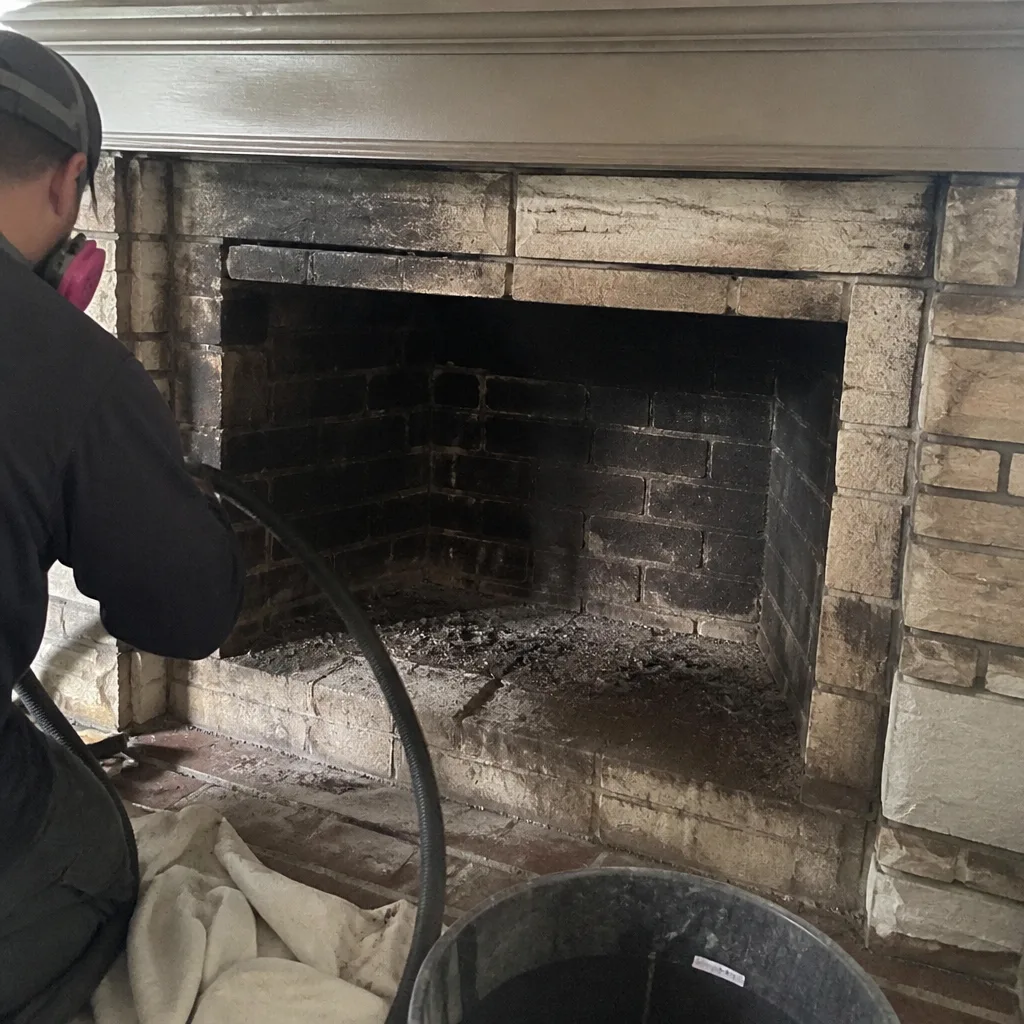 Before
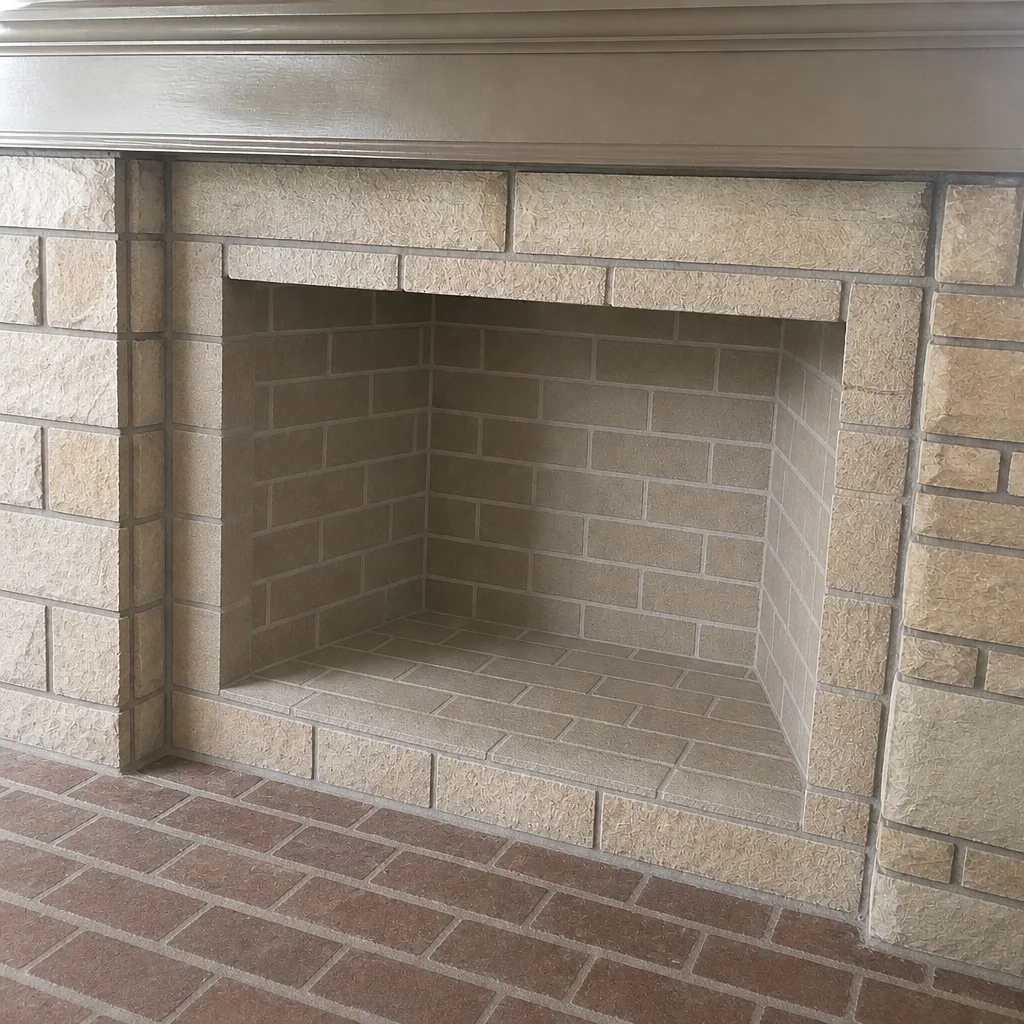 After
When to Call a Professional
Call a professional when you can’t verify the service history, when the fireplace has seen regular wood burning without a recent documented inspection, when you notice staining, spalling, or cracks anywhere on the system, or when the system was converted to gas more than five years ago. Call immediately if you smell gas, if the carbon monoxide alarm has gone off, or if there’s been a chimney fire, however brief. Those are not situations to brush and move on from.
Also call if you simply want the documentation. For homeowners selling a Cypress home or answering an insurer’s questions, a written professional report is worth the visit on its own. Cypress Chimney Sweep Pros offers free estimates in Cypress, and we handle the full system from firebox to cap, so the inspection and any repair that follows come from the same team. Call (877) 492-3411. We answer 24/7. Fast dispatch from 7am to 7pm, Sunday through Friday.
Frequently Asked Questions
DIY cleaning brushes the inside of the flue, while a professional visit covers the firebox, smoke chamber, flue liner, crown, and cap, with camera inspection and a written report. The scope difference matters because the fire risk in most Cypress homes isn’t in the flue itself; it’s in the smoke chamber and firebox joints a brush kit never reaches. Call (877) 492-3411 for a free estimate if you want the full-system version, and we’ll tell you what condition your chimney is actually in.
Only if three conditions hold: you have a documented recent professional inspection, the fireplace has seen only light wood burning since, and you have a HEPA vacuum rated for soot. Miss any one of those and the flue gets clean while the system’s actual condition stays unknown. We answer 24/7 at (877) 492-3411, and a free estimate gives you the baseline the rest of these decisions depend on.
The brush kit is cheaper; the total usually isn’t once you factor in a HEPA vacuum rated for soot, sealing materials, and the cost of getting soot into a room without proper equipment. Add a professional report you’d otherwise have to pay for separately, and the gap narrows further. Call (877) 492-3411 for a free estimate, and we’ll quote the professional side so you can compare honestly.
Cleaning frequency follows how much you burn, not the calendar, and the common rule of thumb is annual inspection with cleaning as the inspection shows it’s needed. A fireplace used regularly for wood burning needs closer attention than a gas log set used a few times a season. We answer 24/7 at (877) 492-3411, and a free estimate visit will tell you where your system sits.
Yes. Gas logs cut down creosote, but the firebox, the burner, and the venting path all still need periodic professional attention, and the original wood system’s condition doesn’t vanish when the conversion happens. If your conversion happened more than five years ago, the wood-era system deserves a look. Call (877) 492-3411 for a free estimate on a gas system assessment.
Creosote builds up season after season, and once it reaches the glazed stage it’s a serious fire hazard in the smoke chamber and flue, while carbon monoxide has a clearer path into the home if the liner has developed cracks. Neither announces itself in advance. Call (877) 492-3411 for a free estimate and a proper inspection, especially if your Cypress home has years of undocumented burning behind it.
The Bottom Line
DIY chimney cleaning is a real option for a narrow group of Cypress homeowners: those with documented recent service, light wood burning since, a gas conversion inside five years, and a HEPA vacuum rated for soot. For everyone else, the flue brush isn’t the whole story. The fire risk lives in the smoke chamber and firebox joints, the insurance exposure lives in the paperwork, and both are things a professional visit addresses and a brush kit doesn’t. Run the five-question decision tree honestly, and if you land on professional, start with a free estimate and let the inspection settle it.
If your whole chimney system needs a look from someone who can find the problem and fix it in the same visit, the team at Cypress Chimney Sweep Pros handles the firebox, flue, crown, and cap with professional-grade materials from DuraFlex, HeatShield, Gelco, Famco, and Olympia Chimney. Our technicians have up to 10 years of experience. Call (877) 492-3411 for a free estimate. We answer 24/7. Fast dispatch from 7am to 7pm, Sunday through Friday.
Written by the team at Cypress Chimney Sweep Pros.