
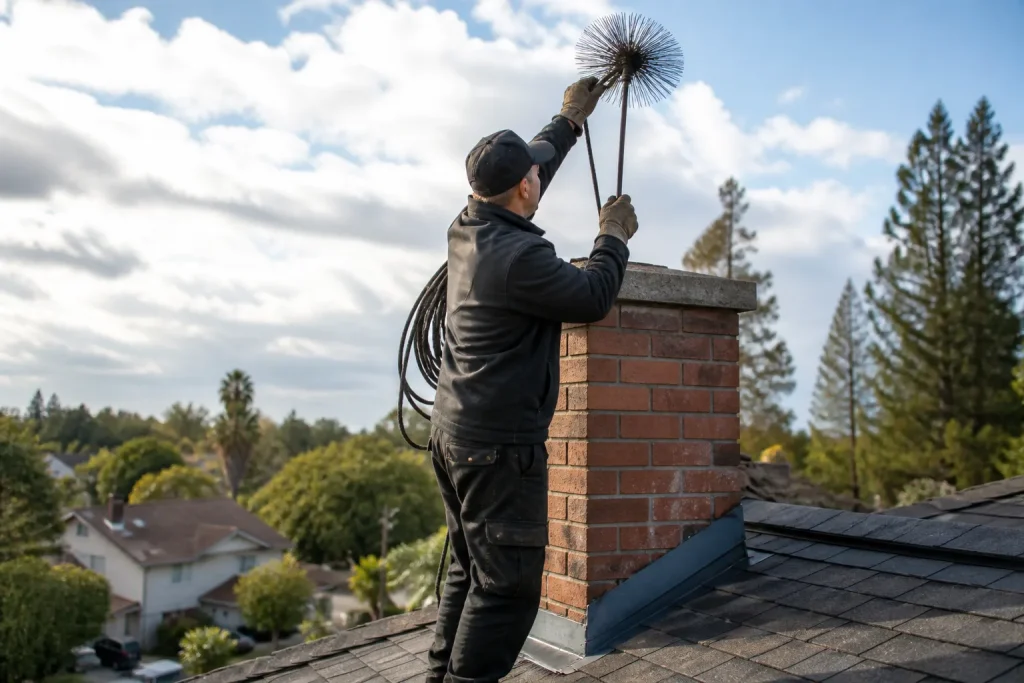
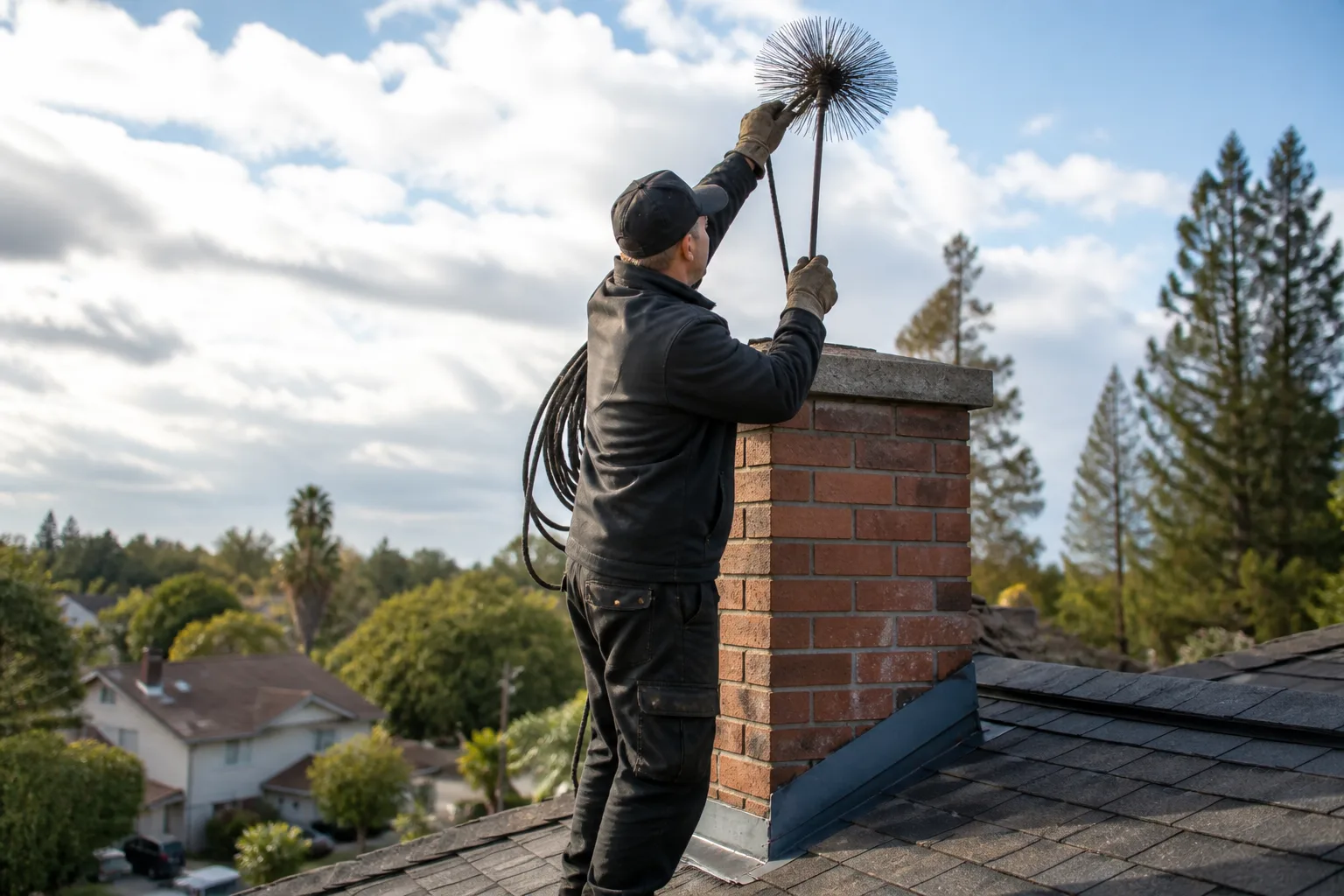
Emergency Chimney Sweep Near Me: What Cypress Homeowners Should Do First
If smoke is backing into the room while a fire is burning, your first call shouldn’t be to a chimney sweep. It should be to figure out whether you have an active flue blockage or a structure fire, because those require two completely different responses. Most “chimney emergencies” that Cypress homeowners panic about fall into one of three categories, and only one of them actually requires an emergency same-day sweep. Knowing which situation you’re facing determines whether you call a sweep immediately, call the fire department, or simply stop using the fireplace and book a normal appointment.
We’ve talked plenty of Cypress homeowners through this exact moment on the phone, and the calmer you can be about identifying what’s happening, the better the outcome. If you’d rather not sort through it alone, call us at (877) 492-3411 and we’ll walk you through it.
Key Takeaways
- Active flames, roaring sounds, or visible smoke from the chimney structure means call 911 first, not a sweep.
- A blocked flue with smoke rolling back into the room means stop the fire, ventilate, and call a sweep the same day.
- Poor draft with no smoke and no fire danger usually means a blocked cap or a dirty flue that can wait for a scheduled sweep.
- Cracked crowns and loose caps are weather-protection problems, not emergencies, but they do need fast attention before the next rain.
- Only a chimney specialist can safely diagnose a flue problem. Handymen and HVAC companies are the wrong call.
What Does a Real Chimney Emergency Actually Look Like?
From inside your Cypress home, there are four distinct situations, and they present very differently. Learning to tell them apart is the single most useful thing you can do before you ever pick up the phone.
A chimney fire. You may hear a low roaring or rumbling sound, like a distant freight train. You might see dense smoke or flames coming from the top of the chimney, feel the chimney breast get unusually hot, or notice a strong, acrid smell. This is the one category that warrants a 911 call first.
A flue blockage. Smoke rolls back into the room instead of going up. The fire struggles to stay lit. You might smell soot or creosote strongly indoors. Common culprits in Cypress are bird nests, leaves, and crumbling mortar. This needs a same-day sweep but is not a fire emergency unless flames are already spreading.
Draft failure. The fire lights but doesn’t draw well. Smoke drifts lazily into the room rather than billowing. The house may feel smoky but nothing is actually burning outside the firebox. This usually points to a cold flue, a blocked cap, or an oversized flue opening, and it can typically wait for a scheduled appointment.
Cap or crown damage. You notice water stains on the ceiling near the chimney, a cracked crown, or a cap that’s come loose after a windy day. There’s no fire danger, but water intrusion can damage the flue if you leave it. This is a same-week problem, not a same-hour one. We use purpose-built chimney hardware from Famco and Gelco for cap and crown work precisely because generic building-supply parts don’t hold up to weather over time.
The 15-Minute Protocol for a Suspected Chimney Fire
If you suspect an active chimney fire, the next 15 minutes matter. Here’s what to do, in order:
- Call 911. Tell them you suspect a chimney fire. Do not wait to confirm it. Fire departments would rather respond to a false alarm than arrive too late.
- Get everyone out of the house. Including pets. Do this before anything else on this list.
- Close the firebox doors and the damper. If you can do this safely on your way out, it starves the fire of oxygen. If reaching the damper means standing near flames or heavy smoke, skip it.
- Do not pour water on the fire. A sudden temperature drop can crack a clay flue tile, and a cracked flue is a much bigger repair than a chimney cleaning.
- Wait for the fire department outside. Do not re-enter until they’ve cleared the scene.
Once the fire department has handled the immediate danger, a certified sweep needs to inspect the flue before you use the fireplace again. Chimney fires can damage the liner in ways you cannot see from the firebox, and using the fireplace again without an inspection is genuinely risky. Our technicians have up to 10 years of experience assessing post-fire damage, and we pair every inspection with the ability to actually repair what we find, using materials like HeatShield and DuraFlex when a liner needs resurfacing or replacement. In Cypress, that single-company accountability saves you from chasing down a separate repair crew after an inspection-only company hands you a report.
Why a Handyman or HVAC Company Is the Wrong Call for a Chimney Emergency
It’s tempting to call whoever you already know when something goes wrong with the house. But chimneys are a narrow specialty, and the stakes are higher than a leaky faucet. A general handyman can’t legally or safely evaluate a flue liner, and an HVAC company understands ductwork and gas appliances, not creosote buildup or flue drafting.
Here’s what to verify under pressure, even if you’re calling in a hurry:
- Ask if they inspect the full system. A sweep who only cleans the flue isn’t equipped to find a cracked crown, a failing cap, or firebox damage that could be behind your symptoms.
- Ask what brands they work with. A technician who uses real chimney-manufacturer products like Olympia Chimney or Copperfield has access to parts built for the job, not generic substitutes.
- Ask whether they can repair what they find. An inspection-only company will find the problem and leave you to source a repair crew yourself, which is the last thing you want mid-emergency.
- Ask how they document findings. A camera inspection with photos you can review means you’re not taking anyone’s word for it.
If you’re not sure who to call, our Cypress Chimney Sweep Pros team can talk you through your situation on the phone and tell you honestly whether you need an emergency visit or a scheduled appointment.
What “Emergency Sweep” Actually Means Once a Technician Arrives
An emergency chimney visit is not just a faster version of a normal cleaning. When a technician arrives for a suspected blockage or draft failure in Cypress, the first priority is safety assessment, not sweeping. Here’s what actually happens:
- Visual and camera inspection first. The technician looks at the firebox, damper, smoke chamber, flue, cap, and crown before touching anything, using a camera to see what’s happening inside the flue.
- Identify the blockage source. Bird nests, creosote buildup, and collapsed mortar are treated differently. The technician needs to know which one they’re dealing with before sweeping.
- Clear the blockage safely. Some blockages require specialized equipment to remove without damaging the flue liner. This is where experience matters most.
- Document and advise. You should receive photos and a clear explanation of what was found and what needs attention next.
A standard chimney sweep appointment follows a similar inspection path but assumes no active problem, so it moves faster and focuses on cleaning. An emergency call spends more time on diagnosis. If the technician finds real damage, whether in the firebox or the flue, our team can move straight into chimney repair or fireplace repair rather than referring you elsewhere.
How to Describe Your Situation on the Phone (So They Arrive Prepared)
The difference between a technician who shows up ready and one who has to turn around for equipment often comes down to how the call is described. Before you dial, run through these questions so you can answer clearly. This list is worth keeping somewhere handy if you use your fireplace regularly through the cooler months in Cypress.
- Is there an active fire right now? Yes, no, or already extinguished.
- What do you see? Smoke rolling into the room, smoke from the chimney top, visible flames, water stains, a loose cap, none of the above.
- What do you smell? Soot, creosote, a burning smell that isn’t wood smoke, or nothing unusual.
- What do you hear? Roaring, rumbling, crackling that sounds different from normal, or silence.
- When did it start? During the fire, after the fire was out, or on a day with no fire burning at all.
- Has anything changed recently? A storm, high winds, a recent cleaning, new construction nearby.
When you call (877) 492-3411, our team uses these details to decide whether to send a technician equipped for a blockage removal or a full inspection, and whether to advise you to call the fire department first. We answer 24/7, and fast dispatch from 7am to 7pm gets a technician moving once your situation is booked. Getting the details right on the phone saves everyone a wasted trip.
When to Call a Pro Instead of Handling It Yourself
Cleaning ash out of the firebox and checking that the damper opens smoothly are reasonable homeowner tasks. Anything involving the flue interior, the cap, the crown, or a suspected fire is not. Flue work requires climbing tools, camera equipment, and knowledge of what normal wear looks like versus real damage. Creosote is also genuinely flammable, and disturbing a heavy buildup without proper containment can create a hazard. If you’re unsure, that uncertainty is your answer: call a pro.
Related services in Cypress: chimney sweep for routine cleaning and inspection, chimney repair for flue and crown issues, and fireplace repair for firebox and damper problems.
The Bottom Line
Most chimney situations that feel like emergencies are one of four things: a chimney fire, a flue blockage, draft failure, or cap and crown damage. Only a chimney fire requires a 911 call. A blockage needs a same-day sweep. Draft failure and cap damage can usually wait for a scheduled appointment, but should not wait indefinitely. Calling a handyman or HVAC company for any of these wastes time and money, while a chimney specialist can diagnose and fix the problem in one visit.
If you’re in Cypress and need help, Cypress Chimney Sweep Pros offers free estimates – call (877) 492-3411. We answer 24/7, with fast dispatch from 7am to 7pm, Sunday through Friday. From the firebox to the chimney cap, we handle it, and the same team that inspects your chimney is the one qualified to repair it.
Frequently Asked Questions
A chimney emergency involves active fire, smoke rolling into the room, or a strong burning smell you can’t explain. A cleaning need shows up as slow draft, soot buildup, or a routine yearly sweep. If you’re unsure, call and describe what you’re seeing and smelling, and we’ll help you decide. Reach us at (877) 492-3411 for a free estimate.
No. Chimney fires can crack or damage the flue liner in ways that aren’t visible from the firebox, and using the fireplace again without an inspection puts your home at risk. A camera inspection should always come before you burn again. Our team can inspect and, if needed, repair the liner using professional materials, so call (877) 492-3411 to schedule.
An emergency sweep focuses on diagnosing and clearing an active blockage or drafting problem, with more time spent on inspection and less on routine cleaning. A regular cleaning assumes no problem and focuses on removing creosote and soot. If you’re mid-problem in Cypress, tell us exactly what you’re seeing so we send the right equipment. Call (877) 492-3411 for a free estimate.
If you see or smell active fire, call 911 first. If smoke is backing into the room but there’s no active fire, stop using the fireplace and call a sweep. Getting this order wrong can waste precious minutes. When in doubt, call (877) 492-3411 and we’ll help you sort it out.
Written by the team at Cypress Chimney Sweep Pros.
Need Chimney Cleaning Help?
Call Cypress Chimney Sweep Pros - the local pro we connect you with is licensed and insured, here with fast help in Cypress.
(877) 492-3411