
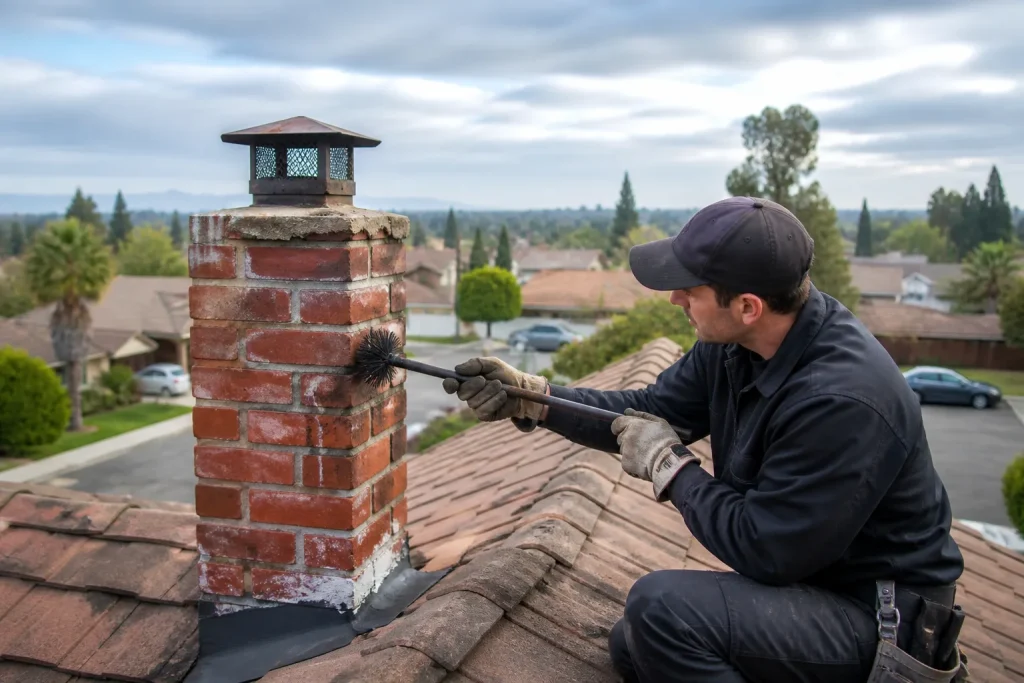
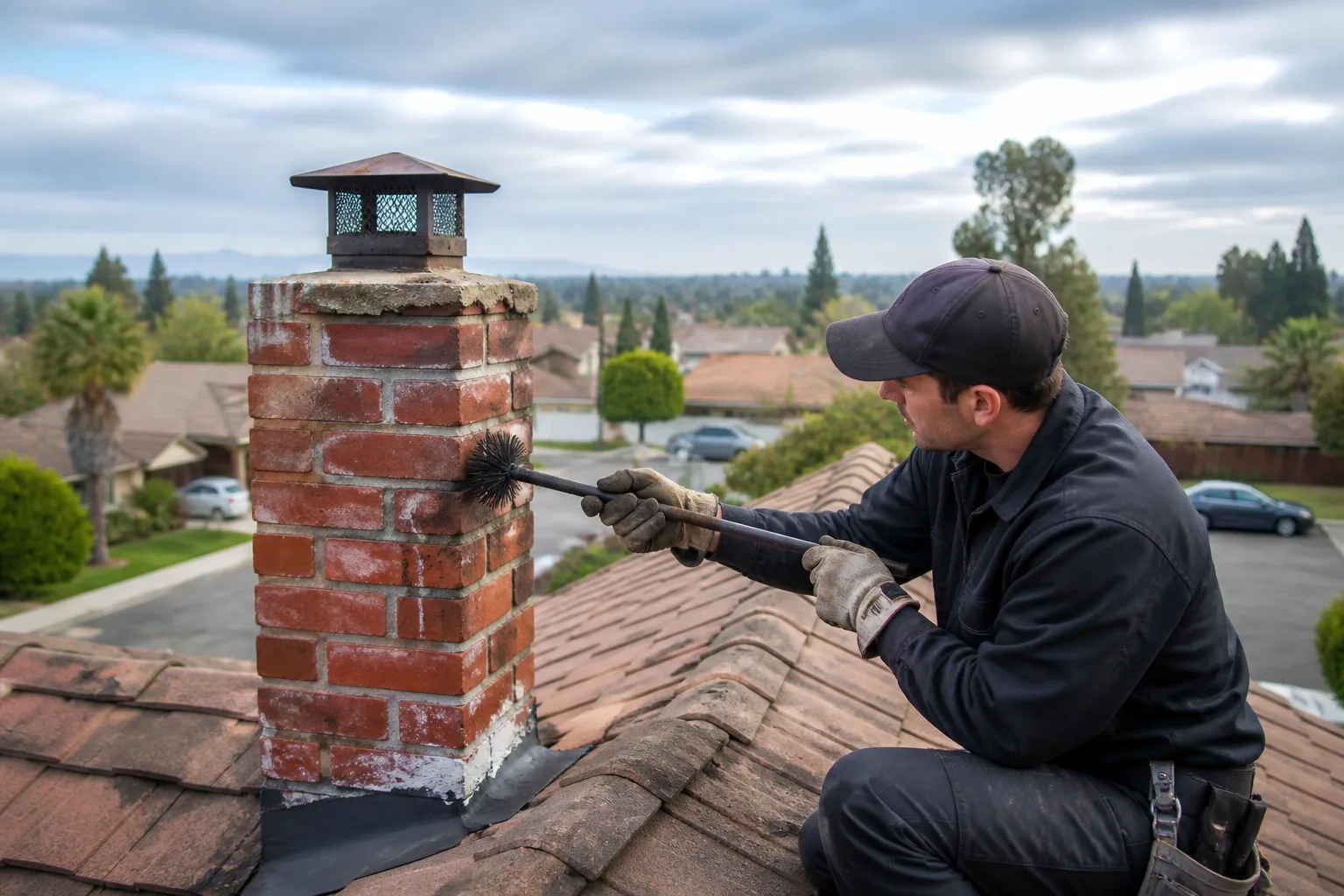
Chimney Sweep: Repair or Replace? How Cypress Homeowners Decide
Most Cypress homeowners ask us the wrong question first. They want to know whether a repair costs less than a replacement, which sounds sensible until you learn that a $400 liner patch on a flue with structural movement underneath is not a repair at all. It’s a pause button. The real question is whether the system is still sound, and a standard annual sweep won’t tell you that. Sorting out repair from replacement takes a different kind of inspection, one that reads the whole chimney instead of just the flue.
If you’d rather have a trained eye make the call, call (877) 492-3411. We answer 24/7, with fast dispatch from 7am to 7pm, Sunday through Friday.
Why the Repair-or-Replace Question Is Really About System Integrity
A chimney isn’t one thing. It’s a stack of parts that all lean on each other: the firebox and its refractory panels, the smoke chamber, the flue liner, the crown on top, and the cap that keeps weather out. When one part fails, the parts around it usually carry extra load, and that’s where the price comparison goes sideways. A homeowner compares a repair quote against a replacement quote and picks the lower number. Five years later the cheaper path has been paid for twice.
In our experience, Cypress chimneys tend to fail in patterns. The weather here is mild, which sounds like good news for a chimney, but mild doesn’t mean dry. That moisture in the air works on masonry and mortar joints a little at a time, and homes here also sit on slab foundations that move with the ground. And because winters are gentle, many homeowners burn in short bursts rather than long, steady seasons, which is a different wear pattern than a cold-climate chimney sees.
What that means for the decision: a repair extends the life of a system that’s still structurally coherent. A replacement is the right call when the structure itself has crossed a threshold. The list below is where we draw that line.
- Liner condition: hairline cracks in a clay liner tile can often be resurfaced. A liner that has shifted, separated at the joints, or lost tiles is a structural problem, not a surface one.
- Crown integrity: a cracked crown that still sits flat and bonded can be repaired and resealed. A crown that has pulled away from the flue or crumbled to the point of letting water into the chimney body is usually a rebuild.
- Firebox refractory: isolated cracks in refractory panels are repairable. Crumbling, missing or displaced panels mean heat is reaching the structure behind them.
- Corbeling and mortar joints: stepped brickwork that has started to lean, or joints that crumble when probed, point to movement in the chimney body itself rather than wear on its surface.
Prefab or Masonry? The Replace Threshold Isn’t the Same
Factory-built fireplace systems and masonry chimneys age on different clocks, and the decision point arrives sooner on prefab. A prefab system is a manufactured assembly with a rated liner and clearances that were engineered together, so when a component fails, the “repair” is really a component swap within a system that may be near the end of its service life. Those failures are also easier to identify: prefab liners show their condition plainly, and the metal parts either hold up or they don’t.
Masonry is more forgiving and more negotiable. Brick, mortar and a clay flue can be resurfaced, repointed and resealed, which is why so many masonry chimneys live well past their first repair cycle. That’s also why we work with HeatShield for flue resurfacing: it lets us restore a liner that’s cracked or worn rather than tear out a masonry flue that’s still structurally sound.
The practical difference for a Cypress homeowner: on a prefab system, ask how much service life is left in the whole assembly, not just the failed part. On masonry, ask which parts have crossed the repair threshold and which are just showing age. Those are two different conversations, and lumping them together is how people end up replacing a chimney that had years left in it, or patching one that didn’t.
What a Level 2 Inspection Tells You That a Sweep Doesn’t
A Level 1 inspection is the annual check that comes with a sweep. It covers what’s visible without tools or access, and it’s the right level for a chimney with no known problems. A Level 2 inspection goes further: it looks at the flue interior, the accessible parts of the chimney structure, and the connections between components. That’s the inspection that generates the data you need for a repair-or-replace decision, and it’s the one most homeowners have never had.
Here’s what we look for at that level, and why it changes the answer:
- Liner interior and joints: cracks you can see from the top of the flue are one thing. Gaps and offsets between liner sections are another, and they only show up when you can see the full run.
- Crown and cap attachment: whether weather protection is still doing its job or has been letting water in for years.
- Firebox and smoke chamber: refractory condition and whether heat has been reaching the structure around it.
- Chimney body alignment: any lean or separation that suggests movement rather than ordinary wear.
This is also where a repair decision becomes concrete. A cap or crown that has failed is a straightforward fix with purpose-built hardware from Famco or Gelco, and it protects everything below it. A liner that needs resurfacing is work we can do. A chimney body that has moved is a different answer, and no amount of patching changes it.
Reading a Repair Estimate Against a Replacement Proposal
Put a repair quote and a replacement proposal side by side and the difference in price is the least useful thing on the page. What matters is what each one includes and what it quietly leaves out. A repair estimate that doesn’t describe the condition it’s fixing is a price without a reason. A replacement proposal that doesn’t explain why repair isn’t an option is a sales document, not an assessment.
In our experience, the line items to scrutinize are these:
- What condition is being addressed? A good estimate names the specific problem and its location. “Liner repair” without detail is a placeholder.
- Is the work warranted to the system, or just to the part? A patch that doesn’t address the cause will be back.
- Does the proposal account for the crown and cap? Replacing a liner under a failing crown is money spent on the wrong end of the chimney.
- Are the materials named? Purpose-built chimney components from manufacturers like Olympia Chimney or DuraFlex signal a specialist at work. Generic building-supply substitutes are a warning sign.
- Does the quote explain what was inspected to reach the recommendation? If it doesn’t, ask. You’re entitled to see the reasoning, not just the number.
The oversell usually shows up as a replacement proposal that skips the inspection findings entirely, or a repair estimate that quietly excludes the crown and cap. Both are ways of moving the number without changing the diagnosis.
When to Call a Pro
Some things you can check yourself: whether the cap is still attached, whether the crown has visible cracks, whether the firebox panels look intact. But the decision this post is about can’t be made from the ground. It needs someone on the roof and inside the flue, with the tools to see what’s actually there.
Call us if you’re seeing any of these: a repair estimate you can’t quite interpret, a replacement proposal that came without a clear reason, a liner that’s been patched before, or a chimney that hasn’t had a Level 2 inspection. We handle the whole system from the firebox to the cap, so the team that inspects is the team that repairs. If you need a chimney repair or want a second opinion on a fireplace repair, we can help. For routine upkeep, a chimney sweep is the place to start.
Related services in Cypress: chimney repair, fireplace repair, and chimney cap and crown installation.
The Bottom Line
Repair or replace isn’t a price question. It’s a question of whether the structure underneath the part is still sound, and that’s what a Level 2 inspection answers. Repair makes sense when the failure is surface-level and the system around it holds. Replacement is the right call when the liner, crown, firebox or chimney body has crossed a structural threshold. Compare estimates on what they diagnose, not just what they cost. And remember that mild Cypress weather still works on a chimney, just slowly.
If you’re in Cypress and need help, Cypress Chimney Sweep Pros offers free estimates. Call (877) 492-3411. We answer 24/7, with fast dispatch from 7am to 7pm, Sunday through Friday. Cypress Chimney Sweep Pros handles the complete system, from firebox to cap, using professional-grade materials from brands like HeatShield, DuraFlex, Gelco and Famco.
Frequently Asked Questions
Yes, in most cases. A Level 1 inspection covers what’s visible during a sweep and is fine for a chimney with no known problems. But a repair-or-replace decision depends on liner joints, crown attachment, firebox condition and chimney alignment, and those need a Level 2 inspection to evaluate. Call (877) 492-3411 for a free estimate on the inspection.
A standard sweep is priced per job by written estimate, and the estimate is free. The exact price depends on the system, its condition and what’s found during the inspection, so we set it in writing before any work is booked. Call (877) 492-3411 for an exact quote.
Often, yes. Hairline cracks, surface wear and worn joints in a liner that’s still structurally in place can be resurfaced with HeatShield. But a liner that has shifted, separated or lost tiles needs replacement, because the problem is structural rather than surface. Which one you’re dealing with is exactly what a Level 2 inspection determines. Call (877) 492-3411 to book one.
A patch on a sound system works. A patch on a chimney with underlying movement or a failing crown tends to return within a couple of burning seasons, and each repair is paid for separately. You can end up spending more over five years than a single correct call would have cost, and the fire risk from a compromised flue doesn’t go away just because the surface looks fixed. Call (877) 492-3411 for a free estimate and a clear diagnosis before you spend on another patch.
Written by the team at Cypress Chimney Sweep Pros.
Need Chimney Cleaning Help?
Call Cypress Chimney Sweep Pros - the local pro we connect you with is licensed and insured, here with fast help in Cypress.
(877) 492-3411